BOOST YOUR ONLINE PRESENCE
Technical SEO Services That Fix Website Issues and Improve Search Visibility
A website can look perfect and still have serious SEO problems. Search engines need to crawl your pages, understand your site structure, and index the right URLs. Technical SEO helps make that process easier.
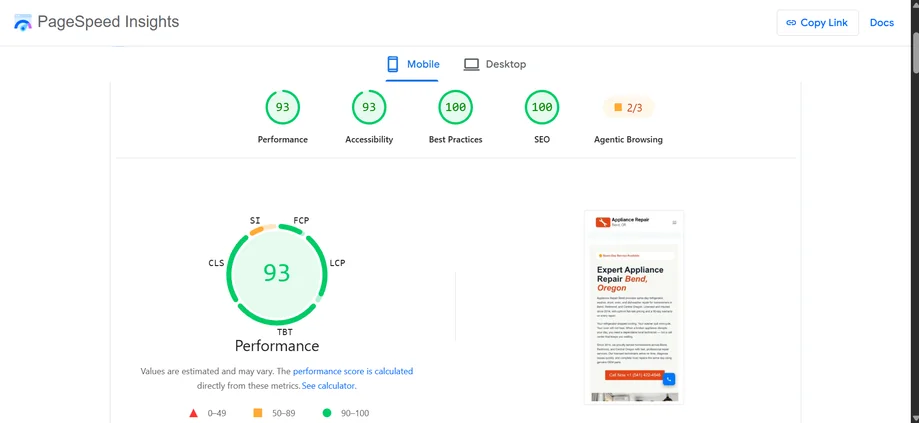
Our technical SEO services focus on finding problems that can limit search visibility, website performance, and user experience. We work with businesses across the UK, USA, Australia, and other markets, using a practical approach to identify problems, explain why they matter, and help implement the right fixes.
Whether you run a local business in Sydney, a service company in London, or an online business serving customers across the USA, your website’s technical foundation matters.
What Is Technical SEO and Why Does It Matter?
Technical SEO is an important part of SEO services which improves the parts of a website that help search engines access, crawl, understand, and index your content. It covers crawling, indexing, website structure, page speed, mobile usability, redirects, structured data, security, and other technical factors.
Think of your website as a building. Your content is what visitors came to see, while your technical setup is the structure behind it. If that structure has problems, important pages can become difficult for users and search engines to discover or access.
How Technical SEO Helps Search Engines Understand Your Website
Search engines discover pages through links, sitemaps, and other signals. They then process those pages and determine whether they can be indexed. Problems with crawling or indexing can prevent valuable pages from appearing in search results.
That is why technical SEO starts with the basics. We check whether important pages are accessible, indexable, internally linked, and correctly structured.
What Happens When Technical Problems Stay Unfixed?
Small technical issues can affect many URLs at once. A poor canonical setup can create duplicate URL problems, while a blocked resource can affect page rendering. Weak internal links can also leave useful pages difficult to discover.
These problems can become more serious as a website grows. A local company with 30 pages has different technical requirements from a large website with thousands of URLs, so our technical SEO work focuses on the issues that matter most for your specific website.
Technical SEO vs On-Page SEO vs Off-Page SEO
Technical SEO focuses on the website foundation.
On-page SEO improves page content, headings, keywords, entities, and search intent
off-page SEO focuses on authority signals such as relevant backlinks and brand mentions.
These areas work together. Strong content cannot reach its full potential if search engines struggle to access, crawl, or index important pages.
Our Technical SEO Services
We begin with a detailed technical SEO audit that looks beyond surface-level errors. We examine how search engines can crawl, process, understand, and index your website while reviewing its overall technical health.
Technical Area | What We Check |
|---|---|
Crawling | Crawl errors, blocked resources, crawl depth, crawl waste |
Indexing | Indexable URLs, noindex tags, indexing issues, excluded pages |
Architecture | URL structure, content hierarchy, navigation, internal links |
Performance | Page speed, Core Web Vitals, server response, heavy resources |
Mobile | Responsive design, mobile usability, mobile performance |
Search Signals | Canonicals, redirects, XML sitemap, robots.txt |
Structured Data | Schema implementation, errors, validation, eligibility |
Security | HTTPS, SSL/TLS setup, mixed content and security issues |
Site Changes | Migrations, URL changes, redirects, traffic protection |
The result is not simply a list of errors. We explain what needs attention, why it matters, and what should happen next.
Website Indexing and Indexability
Crawling and indexing are not the same thing. A search engine may crawl a URL without adding it to its index, which is why we check indexability across important pages.
Our analysis can identify noindex tags, canonical conflicts, duplicate URLs, redirects, soft 404s, and other indexing issues. We also compare important URLs against Search Console data. If a valuable service page is missing from search, we investigate the underlying cause.
Core Web Vitals and Website Performance
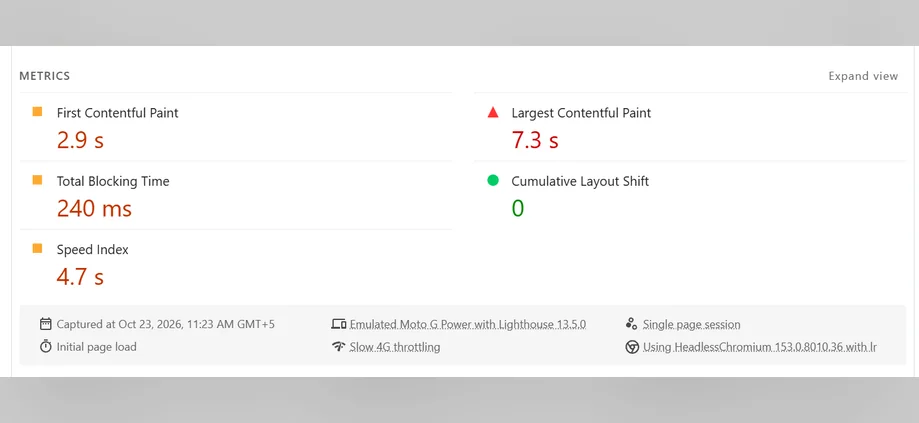
Website speed affects how people experience your pages, so we review Core Web Vitals along with wider performance problems. This can include slow server responses, large images, render-blocking resources, excessive HTTP requests, and inefficient code.
We also check page load behaviour on mobile devices. The goal is not to chase a perfect score for its own sake, but to make important pages faster, easier to use, and technically healthier.
Structured Data and Schema Markup
Structured data gives search engines additional information about page content. We review schema markup, JSON-LD implementation, validation errors, and relevant structured data types.
For local businesses, this can include appropriate business information, while content sites may require different structured data types. We validate the implementation and check whether the markup matches visible page content.
Structured data can help search engines understand pages, but it does not guarantee enhanced search results.
Log File Analysis and Advanced Technical SEO
For larger websites, server logs can provide useful information about how search engine bots interact with your website. Log analysis can show crawler activity, HTTP responses, crawl frequency, and important URL patterns.
This helps identify crawl waste and areas that need deeper investigation, particularly on large or technically complex websites.
Crawlability and Search Engine Crawling
Crawlability determines how easily search engine bots can access your website. Googlebot needs to reach important pages and resources, so we look for blocked URLs, crawl errors, poor crawl depth, broken links, and unnecessary crawl waste.
We also review robots.txt rules and internal linking to make sure important pages are easy for search engines to discover and follow.
Robots.txt Optimization
Robots.txt controls which URLs crawlers can request, meaning a small mistake can potentially block important sections of a website. We review Disallow and Allow rules, crawler directives, and sitemap references while checking whether robots.txt rules conflict with your wider indexing strategy.
Robots.txt is not the same as a noindex directive. Blocking a URL from crawling does not provide the same control as allowing Google to access the page and using an appropriate indexing directive.
How do you measure off-page SEO?
We look at relevant referring domains, quality links, visibility, traffic, leads, conversions, and campaign progress.
Mobile SEO and Mobile-First Indexing
Most businesses need a website that works well on phones. We check responsive layouts, mobile usability, content visibility, navigation, buttons, images, and performance.
We also review whether important mobile pages provide the same useful information as desktop versions. A website should work properly for someone searching from a phone in a city centre, suburb, or local service area.
XML Sitemap Optimization
An XML sitemap helps search engines discover important URLs. We check sitemap coverage, URL quality, status codes, canonical URLs, and unnecessary entries.
We also look for outdated or non-indexable URLs inside sitemaps. A sitemap should support your website structure rather than hide technical problems.
Canonicalization and Duplicate URLs
Websites can create multiple URLs for similar or identical content. Parameters, filters, trailing slashes, HTTP and HTTPS versions, and other URL variations can create confusion for search engines.
We review canonical tags and canonical conflicts and, where needed, improve URL signals so search engines can better understand the preferred version.
Website Security and HTTPS
Security is part of a healthy website. We check HTTPS, SSL/TLS configuration, mixed content, insecure resources, and related technical issues.
We also review redirects between HTTP and HTTPS versions to create a cleaner technical foundation and a safer browsing experience for visitors.
Website Architecture and Internal Linking
A clear site structure helps both users and search engines. Important pages should not sit several clicks away from relevant sections, so we review your website architecture, URL structure, content hierarchy, navigation, and internal linking structure.
We also look for orphan pages. An orphan page may exist on your website without useful internal links pointing toward it, making it harder for search engines and users to discover.
Website Migration SEO
The work starts before the migration. We then monitor the website after launch and investigate unexpected changes.
Website migrations can create major SEO risks. Changing domains, URLs, navigation, CMS platforms, or site structures can affect existing visibility.
Technical SEO for Different Website Types
WordPress Technical SEO
WordPress websites can develop technical issues through plugins, themes, taxonomies, duplicate archives, page builders, and configuration changes. We review indexation, sitemaps, canonicals, internal links, performance, and website structure.
The goal is to keep the WordPress setup useful without adding unnecessary technical complexity.
Local Business Technical SEO
Local businesses need more than a service page and a phone number. We review location architecture, service-area pages, internal linking, mobile performance, structured data, and important business information.
For a plumber in Brisbane or a contractor in Manchester, the website should clearly connect services with the areas served.
International Technical SEO
International websites need clear regional and language signals. We review international URL structures, hreflang implementation, regional duplication, canonical signals, and country targeting.
This helps reduce confusion between different versions of similar pages and gives search engines clearer signals about the intended audience for each version.
Our Technical SEO Process
1. Website Audit and Technical Assessment
We start by understanding your website, platform, market, and business goals. We then crawl the site and review available search data to understand its current technical condition.
2. Find and Verify Technical Issues
We do not treat every automated warning as a real SEO problem. We verify important issues manually to separate genuine problems from low-priority tool warnings.
3. Prioritize Issues by Impact
Not every technical issue deserves the same level of attention. We consider the number of affected pages, business value, SEO impact, and implementation effort to determine which issues should be addressed first.
4. Technical SEO Implementation
Depending on the project, we can implement fixes or provide clear instructions for your developer. We explain what changed, why the change was needed, and how it supports the website’s technical SEO.
5. Testing and Validation
After changes are implemented, we test important URLs again. We check redirects, indexability, structured data, mobile behaviour, performance, and other affected areas to make sure the fixes are working correctly.
6. Performance Tracking
Technical SEO needs ongoing monitoring. We track technical health, indexing signals, crawl issues, performance, and organic search data to identify changes that may require attention.
7. Ongoing Technical SEO Maintenance
Websites change constantly. New plugins, pages, redirects, templates, and development work can create new technical problems. Regular monitoring helps catch issues before they spread across the website.
How We Prioritize Technical SEO Problems
We normally separate problems into four levels based on their potential impact.
Critical issues can prevent important pages from being crawled or indexed. High-impact issues affect important sections or large groups of URLs. Medium-impact issues can improve performance, structure, or usability, while lower-priority issues usually involve smaller improvements that can be addressed after major problems are handled.
This keeps technical SEO focused on business impact instead of creating a huge list of minor warnings.
Is SEO Dead Now With AI?
No single technology has removed the need for SEO. Search is changing, including AI-powered search experiences, which makes clear information and strong technical foundations important for websites competing for visibility.
Google’s current guidance for generative AI features continues to point website owners toward established SEO fundamentals and people-first content. AI should not replace useful content, technical quality, or real expertise.

Common Technical SEO Problems We Fix
We commonly investigate crawling problems, indexing issues, noindex mistakes, incorrect canonical tags, duplicate URLs, broken internal links, orphan pages, poor crawl depth, redirect chains, broken redirects, XML sitemap errors, robots.txt problems, slow pages, Core Web Vitals issues, mobile usability problems, schema errors, HTTPS issues, migration problems, and international SEO conflicts.
The exact problems depend on your website. A technical SEO audit should always start with evidence from the actual site.
Can ChatGPT Do SEO?
ChatGPT can help with research, ideas, outlines, analysis, and drafts, but it cannot independently guarantee rankings or replace access to your website data.
Technical SEO still requires website crawling, verification, testing, implementation, and monitoring. AI can assist the workflow, but it should not become a substitute for evidence.
Technical SEO Tools We Use
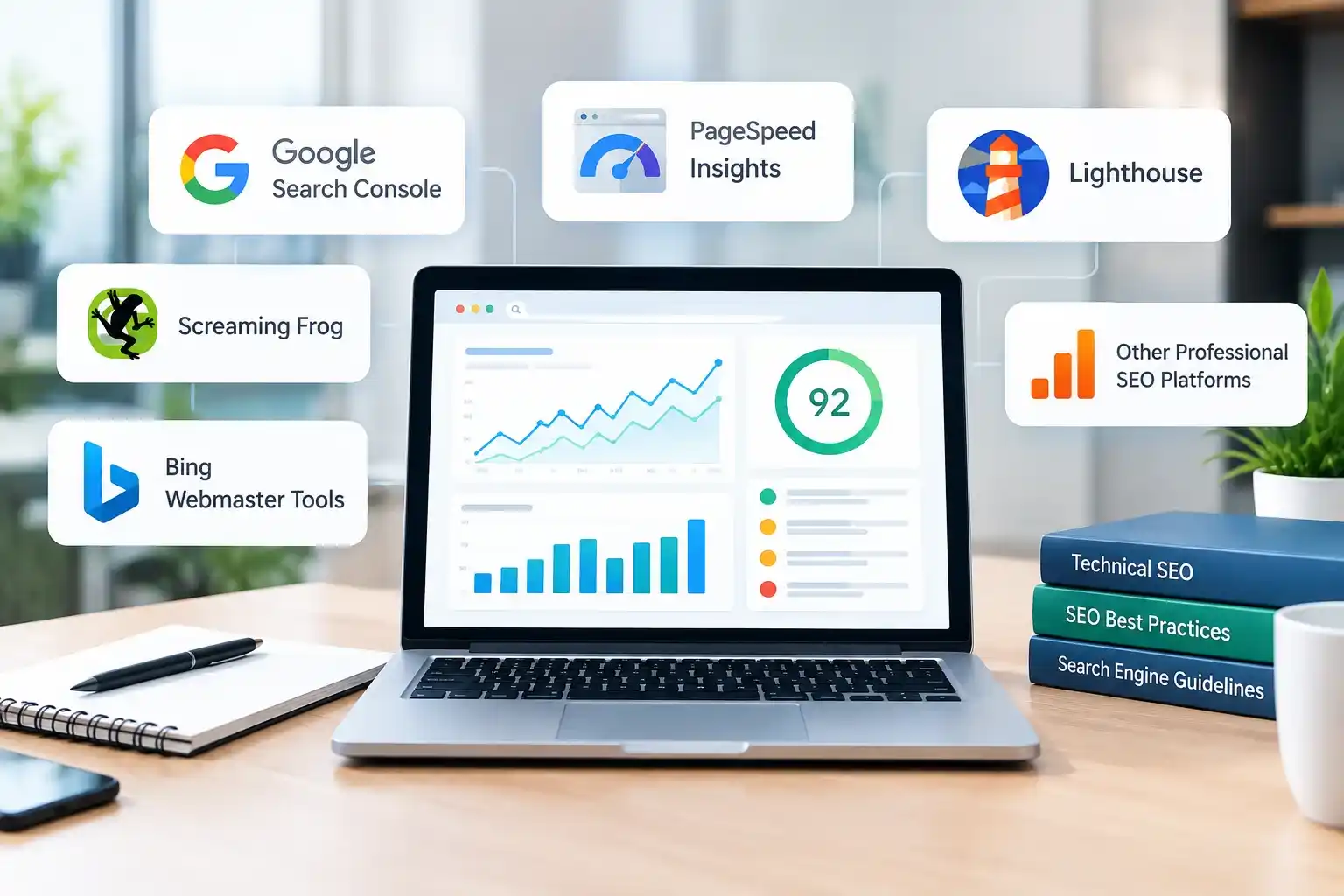
The tools depend on the website and project. Common technical analysis tools include Google Search Console, Google PageSpeed Insights, Lighthouse, Screaming Frog, Bing Webmaster Tools, and other professional SEO platforms.
We use tools to find evidence, but we do not treat automated scores as the final answer. Google also recommends checking SEO advice against its official documentation and being cautious about services that promise ranking results.
Can I Do SEO Myself?
Yes, basic SEO can be learned and managed in-house. Google provides free documentation and Search Console for website owners.
The challenge comes with larger websites or complex technical problems. A professional technical SEO specialist can help when issues involve thousands of URLs, migrations, international targeting, complex architecture, or development work.
The right approach depends on your website and available resources.

How We Measure Technical SEO Performance
Technical SEO success is not measured by fixing the largest number of errors. We look at meaningful changes such as better indexation, fewer crawl problems, improved page performance, stronger internal linking, healthier technical signals, and better organic search visibility.
For commercial websites, we also care about leads, enquiries, calls, and sales. The right measurement depends on your business model and goals.
Technical SEO Pricing
There is no single technical SEO price that fits every website. A small local website needs a different level of work from a large international site.
Pricing can depend on:
Website size
Number of URLs
CMS
Technical complexity
Current SEO health
International targeting
Migration requirements
Development support
Ongoing monitoring
Australian businesses may also ask, “How much does SEO cost in Australia?” The answer depends on the same factors. A useful SEO quote should explain the work involved rather than simply giving you a monthly number.
How Much Should You Pay for SEO Services?
Do not choose an SEO service based only on price. Compare the work included, experience, reporting, implementation support, and expected scope.
Ask what will be audited, which problems will be fixed, and how the agency will measure progress. A clear scope is more useful than a vague promise of better rankings.
How Do You Find a Good SEO Company?
Look for an SEO company that explains its process clearly. Ask how it finds technical issues and how it validates fixes, and check whether recommendations are supported by evidence.
You should also understand who will perform the work. Avoid agencies that promise guaranteed rankings or claim special access to Google’s ranking systems.
Google itself recommends carefully evaluating third-party SEO advice and checking claims against official Search guidance.
Frequently Asked Questions
Get Started With Technical SEO
A technical problem does not always need a complicated solution. The first step is finding the real issue.
Tell us about your website, your current SEO challenges, and what you want to achieve. We can review the technical foundation and identify where improvements can make the biggest difference.
Request a Technical SEO Audit and get a clear view of what needs attention.
Let’s discuss your website, SEO goals, and the next steps for your project. Contact us to discuss your requirements.