
BLOG • WORDPRESS SEO
Rank Math vs Yoast SEO: Which Is Better in 2026?
Choosing an SEO plugin feels like a small decision. It shapes your daily workflow for years, though. Titles, schema, sitemaps, and redirects all flow through it.

This rank math vs yoast guide compares both plugins fairly. We cover free features, ease of use, and speed. We also cover schema, support, and upgrade paths. The right pick depends on your site and skills. Both plugins power sites inside our managed WordPress SEO services.
Quick answer: Rank Math gives more features free for most sites. Yoast offers a simpler start for complete beginners. Both handle core SEO tasks reliably well. Pick Rank Math for value and control. Pick Yoast for guidance and a calmer interface.
What this comparison covers:
- Setup and ease of use for beginners
- Free versus premium feature differences
- Schema, redirects, and advanced tools
- Content analysis and writing guidance
- Speed, updates, and support quality
- A clear verdict by site type
The Short History Behind Both Plugins
Yoast SEO launched first and defined the category early. Millions of sites learned SEO through its traffic lights. Its team also publishes respected SEO training content.
Rank Math arrived later with a modular design. It bundled tools that rivals charged extra for. Redirects, schema options, and analytics came free early. That value push won many switchers quickly.
Both plugins now sit among the most installed WordPress tools. Both appear in the official WordPress.org plugin directory with strong ratings. Neither choice puts your rankings at risk alone.
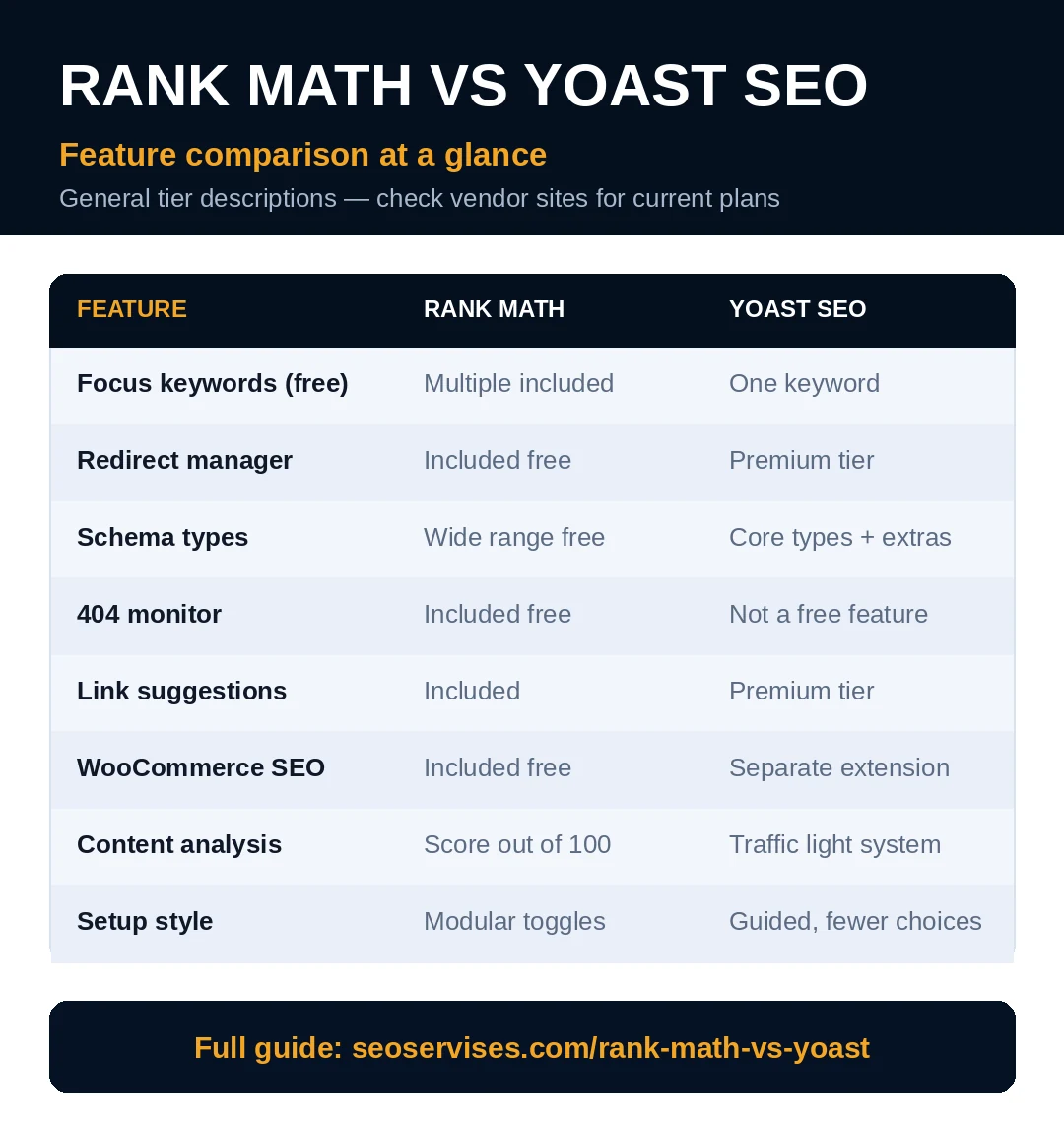
Table 1: Feature Comparison at a Glance
This table uses general tier descriptions, not fixed prices. Check each vendor site for current plan details.
| Feature | Rank Math | Yoast SEO |
|---|---|---|
| Focus keywords, free tier | Multiple keywords included | One keyword in free tier |
| Redirect manager | Included free | Premium tier mainly |
| Schema types | Wide range free | Core types, extensions add more |
| 404 monitor | Included free | Not a core free feature |
| Internal link suggestions | Included | Premium tier feature |
| WooCommerce SEO | Included free | Separate premium extension |
| Content analysis | Score out of 100 | Traffic light system |
| Setup style | Modular, many toggles | Guided, fewer choices |
Setup and Ease of Use
Yoast keeps setup short and friendly for newcomers. The first-time configuration asks plain, guided questions. Most owners finish without touching advanced settings. The interface hides complexity until you need it.
Rank Math setup asks more questions up front. Its wizard imports data from other plugins automatically. You then toggle modules on or off freely. That control rewards users who like full dashboards.
Beginners often feel calmer inside Yoast screens. Experienced users often feel limited there instead. Neither feeling is wrong for your own workflow. Try the free versions before judging either one.
Which plugin is easier for beginners, Rank Math or Yoast?
Yoast is easier for most complete beginners today. Its traffic lights give one clear next step. Its wording avoids jargon in most places. Rank Math shows more data on each screen. That depth helps later but can overwhelm week one.
Content Analysis and Writing Help
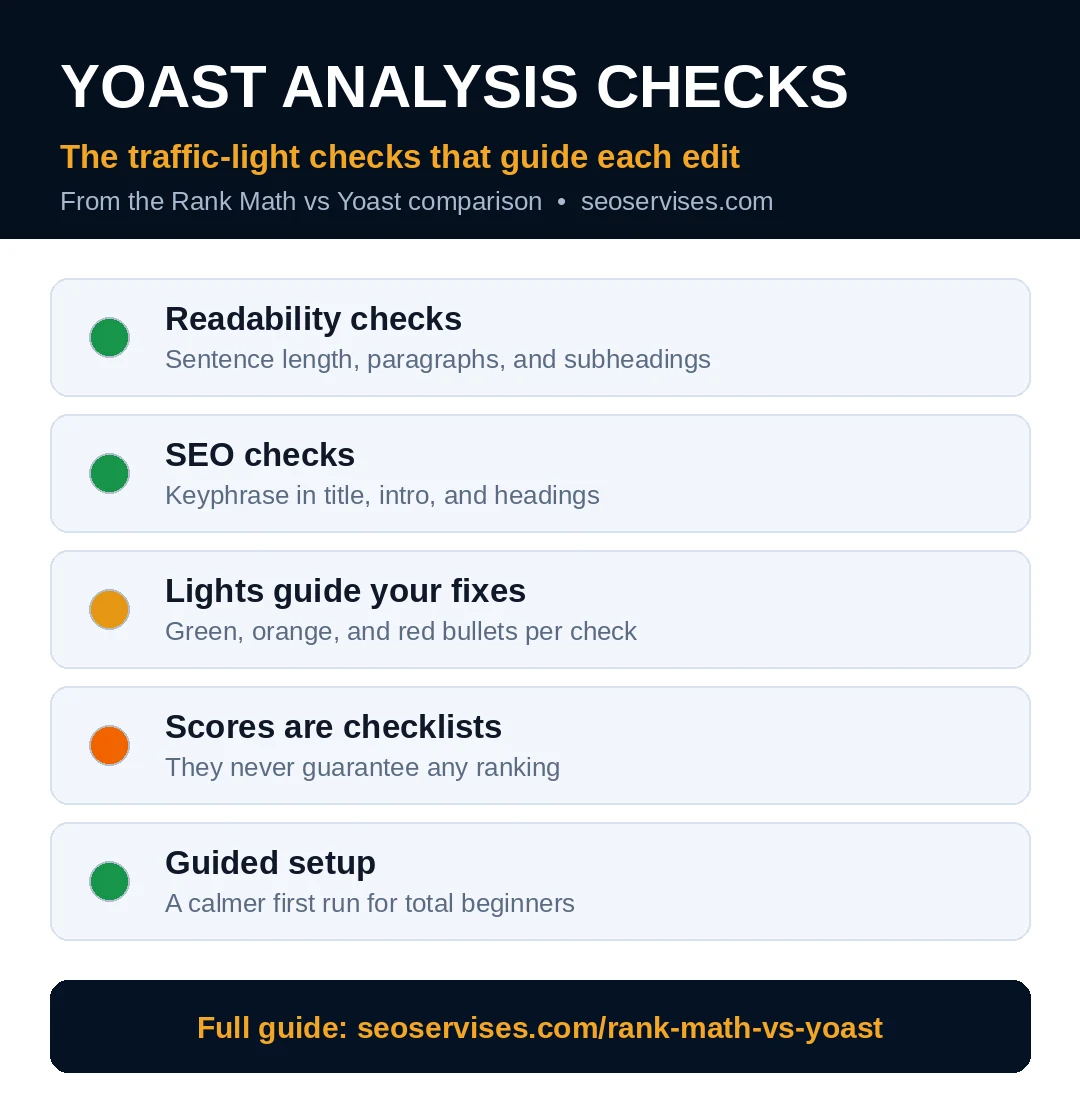
Yoast scores readability and SEO with colored signals. Green, orange, and red bullets guide each edit. Writers learn basic on-page habits very quickly. Some writers chase green lights too hard, though.
Rank Math scores content out of one hundred points. It checks title, links, images, and keyword placement. It supports several focus keywords per post free. Its Content AI offers suggestions on paid credits.
Treat both scores as checklists, not ranking guarantees. A perfect score never promises a top position. Search intent and content quality still decide outcomes. Google repeats this point across Search Central guidance.
Does a green Yoast score guarantee better rankings?
No plugin score guarantees any ranking at all. Scores only check basic on-page patterns. They cannot judge expertise, trust, or search intent fit. Use scores to catch missed basics quickly. Then edit for readers, not for colored lights.
Schema and Rich Results
Schema helps Google show stars, FAQs, and prices. Both plugins add core schema without any coding. Article, FAQ, and product types matter most commonly.
Rank Math includes a wider schema library free. You can build custom schema templates per post type. Video, job, event, and recipe types come included. That breadth suits review and affiliate sites well.
Yoast outputs clean, well-tested core schema graphs. Its add-on extensions expand local and commerce coverage. Local businesses may need the paid local extension. Compare your needed schema types before choosing.
For setup steps, see our full WordPress SEO checklist guide.
Redirects, Errors, and Site Health Tools
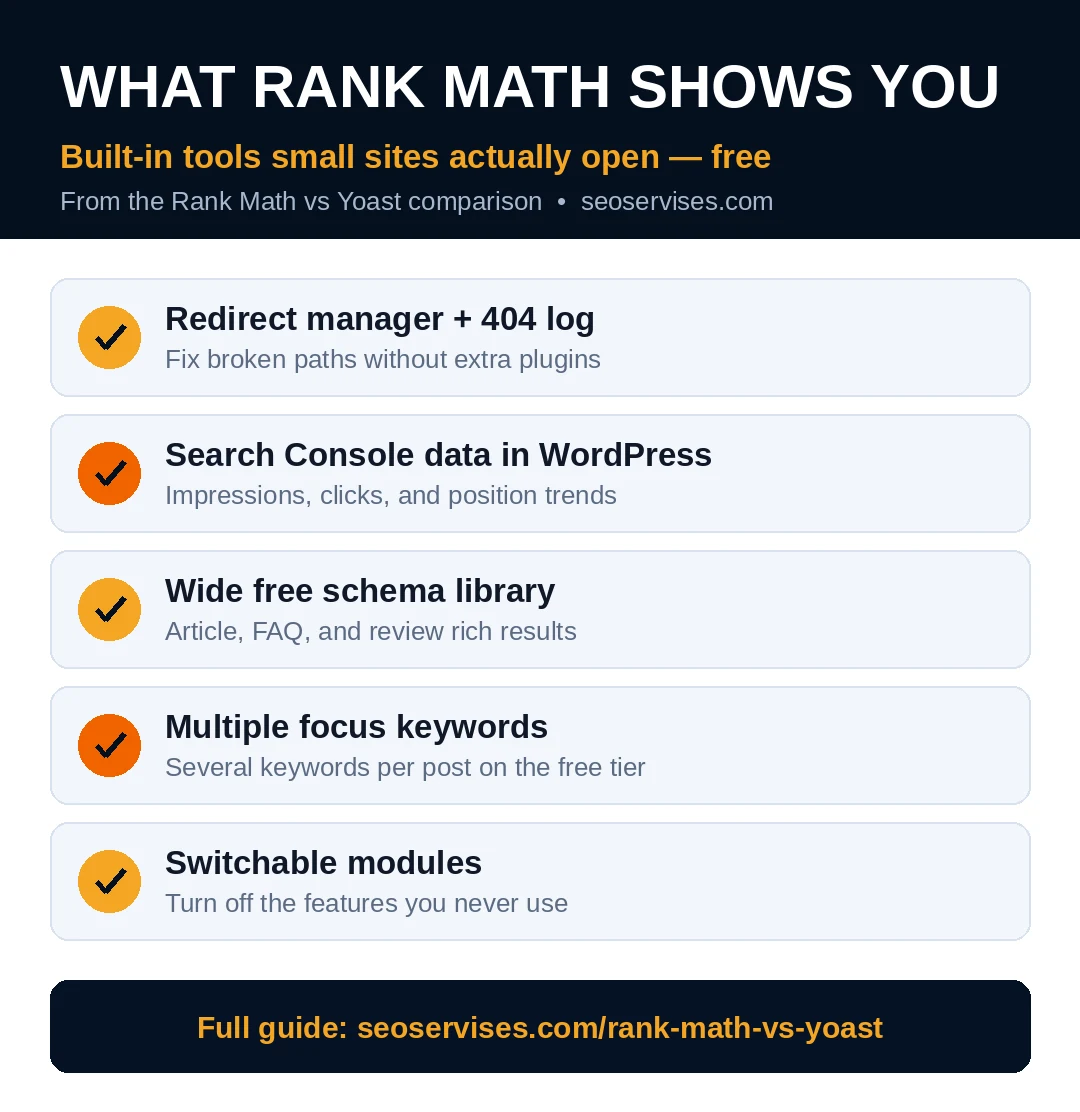
Redirect tools matter once URLs start changing. Rank Math includes a redirect manager free. It also logs 404 errors inside your dashboard. Fixing broken paths takes minutes, not extra plugins.
Yoast places redirect management in its premium tier. Free users need a separate redirect plugin instead. That extra plugin adds one more update to manage.
Rank Math also shows Search Console data inside WordPress. You see impressions, clicks, and position trends quickly. Yoast connects to Search Console more lightly. Data fans usually prefer the Rank Math view.
Can I switch from Yoast to Rank Math safely?
Yes, the switch is safe with the built-in importer. It copies titles, descriptions, and key settings automatically. Export a backup before you start any migration. Keep Yoast inactive until you verify output. Delete the old plugin only after checks pass.
Speed and Performance Impact
Both plugins add some code to your site. Modern versions keep front-end weight fairly light. Rank Math loads modules only when enabled. That modular design can reduce wasted overhead.
Yoast runs a fixed core on every site. Its footprint stays predictable and well documented. In most tests, neither plugin decides speed alone. Hosting, theme, and images matter far more.
Disable modules and features you never use. Test speed before and after any plugin change. Measure on mobile, where margins matter most.
Premium Tiers, in General Terms
Both vendors sell premium tiers with extra tools. Rank Math premium adds rank tracking and advanced analytics. It also expands schema and keyword capacity further. Its licensing often covers many personal sites together.
Yoast premium adds internal linking help and redirect tools. It also adds multiple keywords and content insights. Separate extensions cover local, video, and commerce needs. Costs stack up when you need several extensions.
Do not buy premium for features you will never open. Most small sites run well on free tiers for years. Upgrade when a missing tool blocks real work.
Is Rank Math really free, or is it a trial?
The free version is a full plugin, not a trial. It stays free with no time limit attached. Premium adds tracking, reports, and higher limits. Most small business sites never need the upgrade. Start free and judge after three months of use.
Support, Updates, and Community
Yoast brings a long track record and huge community. Tutorials exist for almost every Yoast question online. Its team ships updates on a steady rhythm. Support quality on premium plans rates well generally.
Rank Math support earns strong reviews from users too. Its Facebook community answers common questions fast. Update pace is quick, sometimes very quick indeed. Fast updates occasionally mean testing changes carefully first.
Check recent reviews before you commit either way. Look at update history inside the plugin directory. Stability matters more than one flashy feature.
Table 2: Which Plugin Fits Which Site?
| Site type | Better fit | Why |
|---|---|---|
| First business site, total beginner | Yoast SEO | Calmer setup, guided checks |
| Blog chasing rich results | Rank Math | Wider free schema library |
| Affiliate or review site | Rank Math | Review schema, multiple keywords free |
| WooCommerce store | Rank Math | Commerce SEO included free |
| Agency with many client sites | Rank Math | Broad licensing, built-in tools |
| Team that loves simple training | Yoast SEO | Huge tutorial library available |
Breadcrumbs, Sitemaps, and Daily Details
Both plugins generate XML sitemaps without manual work. Both update sitemaps when you publish new content. Both let you exclude thin post types easily. Differences here stay minor for most small sites.
Breadcrumbs differ slightly in setup and styling control. Rank Math includes breadcrumb settings inside its modules. Yoast offers breadcrumbs with strong theme integration history. Either output helps visitors and search engines alike.
Social sharing previews come standard in both plugins. You can set default images for posts lacking photos. Title templates save time across large content libraries. Rank Math exposes more template variables by default.
News and video site owners face narrower choices. Yoast sells dedicated extensions for those special cases. Rank Math covers video details inside its schema tools. Check your exact format needs before paying anything.
What Experienced Users Complain About
Yoast users often mention upsell notices inside dashboards. Premium prompts appear across several admin screens regularly. Some owners find that noise distracting during writing. Others ignore it and value the guidance more.
Rank Math users often mention the settings volume. Dozens of toggles can slow first-time configuration sessions. A wrong toggle can hide sitemaps or titles. Careful setup checks prevent most of those surprises.
Both plugins occasionally clash with page builders temporarily. Updates usually resolve those conflicts within days. Keeping plugins current reduces conflict risk sharply. Always test major updates on staging when possible.
Neither complaint should decide your choice alone. Daily comfort matters more than rare annoyances overall. Pick the dashboard your team will actually open.
Our Verdict by Priority
Choose Rank Math if free features matter most. Its redirects, schema, and analytics save plugin sprawl. It suits growing sites and multi-site owners best. The learning curve pays back within weeks.
Choose Yoast if simplicity matters most to you. New teams onboard faster with its guidance style. Its defaults protect beginners from risky settings. Many long-running sites stay happily on Yoast forever.
Avoid running both plugins at the same time ever. Duplicate output confuses Google and slows admin work. If you switch, follow the steps in our WordPress mistakes guide to dodge migration errors.
Which plugin is better for WooCommerce SEO?
Rank Math fits most WooCommerce stores better free. Product schema and commerce settings come included. Yoast needs a paid extension for similar depth. Large stores should test both on staging first. Checkout and product feeds matter more than scores.
Final Recommendation
There is no bad pick between these two plugins. There is only a better fit for your habits. Match the tool to your team, not to hype.
Start free, configure fully, and publish consistently. That routine beats any premium feature list. Contact us for help choosing and configuring your plugin.
Frequently Asked Questions
Is Rank Math better than Yoast for SEO results?
Neither plugin ranks your site by itself. Both output similar core meta data and sitemaps. Results come from content, links, and site health. Rank Math offers more free tools around that work. Yoast offers simpler guidance toward the same goals.
Will switching plugins hurt my rankings?
A careful switch should not hurt rankings at all. The importer preserves titles, descriptions, and canonical data. Rankings depend on that data staying consistent. Back up first and verify key pages after. Watch Search Console closely for two weeks.
Can I use Rank Math and Yoast together?
No, never run both SEO plugins together. They will duplicate titles, sitemaps, and schema output. Google may read conflicting data from your pages. Pick one plugin and remove the other fully. This rule applies to any SEO plugin pair.
Which plugin is lighter and faster?
Both plugins stay light when configured with care. Rank Math can disable unused modules entirely. Yoast keeps a lean, fixed core running always. Real speed gaps usually trace to hosting or images. Test your own site rather than trusting generic claims.
Do I need the premium version of either plugin?
Most small sites do not need premium at first. Free tiers cover titles, sitemaps, and basic schema. Upgrade when tracking or redirects become daily needs. Agencies and stores hit that point sooner than blogs. Buy for one clear need, never for fear.






One Comment