BLOG • LOCAL SEO
How to Rank in the Google Map Pack: A Practical Guide
Search for a plumber, dentist, or roofer nearby. Before the normal blue links, a map appears. Three businesses sit inside that box. Those three spots win most local calls.

That box is the Google Map Pack. Ranking there puts you ahead of bigger rivals. It also puts you where ready buyers look first. Most owners never learn how Google picks them.
Google actually publishes its local ranking rules. They rest on relevance, distance, and prominence. This guide turns those three factors into actions. It follows the same system behind our local SEO services.
Quick answer: To learn how to rank in google map pack results, work two levers. Relevance comes from a complete, well categorized profile. Prominence grows through reviews, citations, links, and photos. Distance is fixed by your real address. Nobody can pay Google for better local ranking.
Your action plan at a glance:
- Verify and complete your Google Business Profile
- Pick the most specific primary category available
- Add every service, photo, and accurate hour
- Keep name, address, and phone identical everywhere
- Earn steady reviews and reply to each one
- Strengthen your website location pages and links
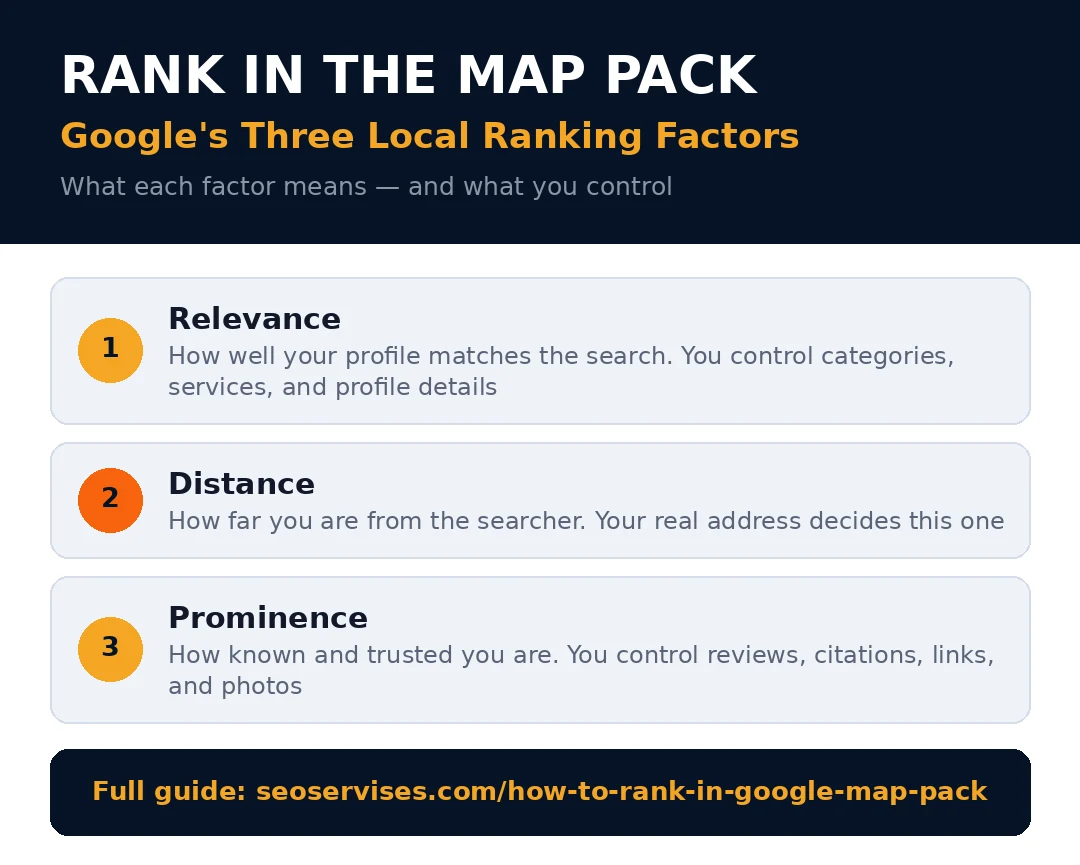
Table 1: Google’s Three Local Ranking Factors
Google names these factors on its own help page. Read the official local ranking guidance before any hack.
| Factor | What it means | What you control |
|---|---|---|
| Relevance | How well your profile matches the search | Categories, services, profile details |
| Distance | How far you are from the searcher | Almost nothing; your real address rules |
| Prominence | How known and trusted you are | Reviews, citations, links, photos |
Step 1: Win Relevance With Your Profile
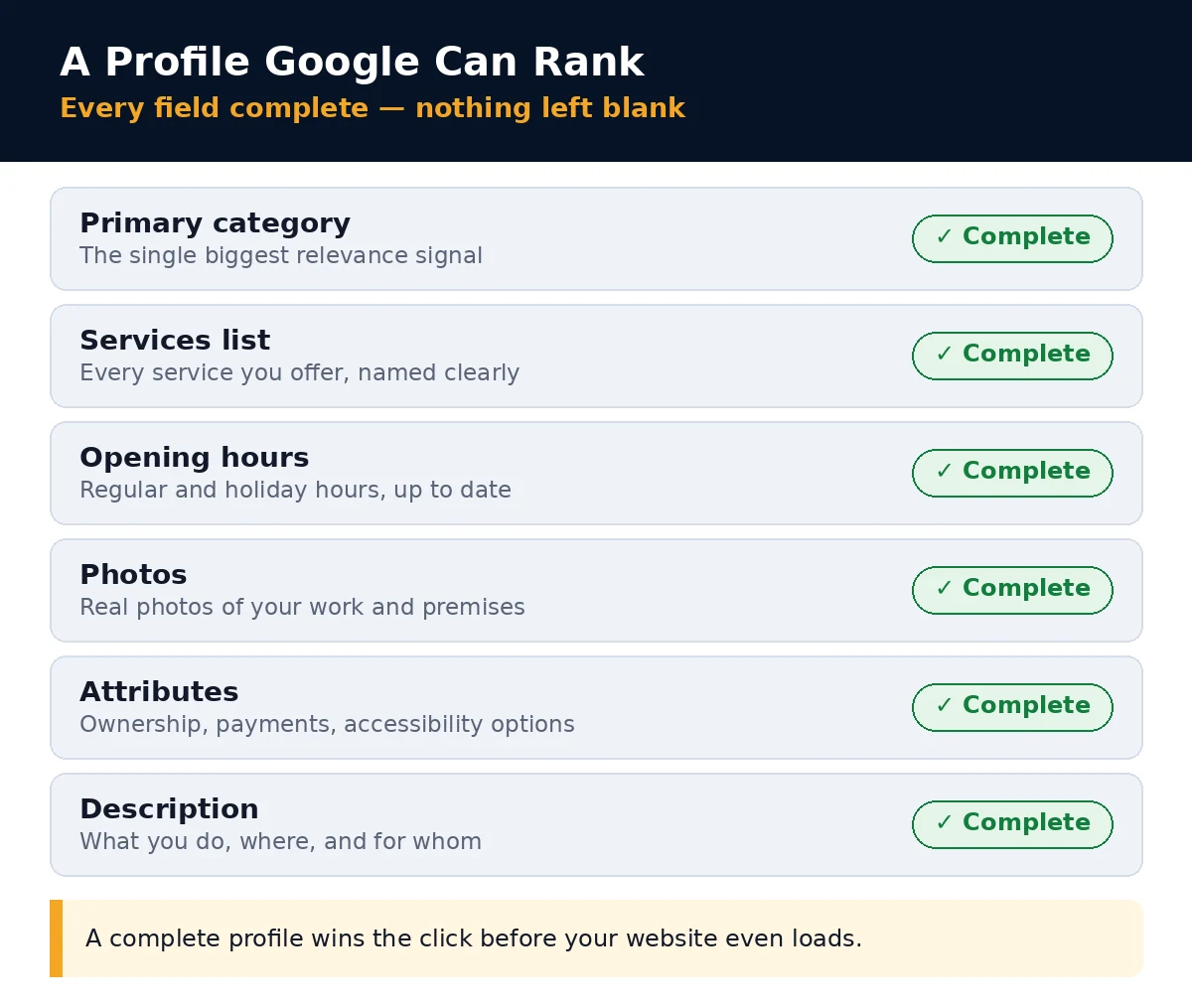
Relevance starts with your primary category choice. Pick the most specific category that fits. A personal injury lawyer should not choose lawyer. Specific categories match specific searches far better.
Add secondary categories for real extra services. A dentist offering implants should list both. Never add categories for services you lack. Fake categories risk edits or suspension later.
List every service with a short description. Services help Google match long tail searches. Add prices where they help buyers decide. Keep the list current as offers change.
Follow our full Google Business Profile optimization guide for field details. It covers attributes, products, and posts too. A complete profile beats a bare one daily.
Write your business description in plain customer words. Name your main services and service area. Skip keyword stuffing and sales hype entirely. Real details help both Google and readers.
How do I rank higher on Google Maps for free?
Verify and fully complete your business profile. Choose the most specific primary category available. Keep your contact details consistent everywhere online. Ask every happy customer for a review. Add real photos of your work regularly. These steps cost time, not ad money. They move rankings more than most paid tricks.
Step 2: Accept What Distance Decides
Distance is the factor you cannot optimize. Google measures from the searcher location outward. A closer rival starts with an edge. That edge grows as searches get specific.
Your real address sets your ranking center. Service area settings hide your address, not distance. Google still ranks you from that address. Fake addresses and virtual offices break rules.
You can widen your practical reach honestly. Strong relevance and prominence stretch your radius. Reviews and links help you win farther searches. Weak profiles only rank very close by.
Does my business address really affect ranking?
Yes, address location shapes your ranking area directly. Google ranks partly by distance from each searcher. A real office in a commercial area helps. It usually ranks across a wider area nearby. A hidden home address often ranks tighter. Never fake an address to chase reach. Suspensions cost far more than reach gains.
Step 3: Build Prominence With Reviews
Reviews are the loudest prominence signal you control. Count, rating, and freshness all matter together. A steady stream beats an old burst. Recent reviews show an active, trusted business.
Ask every satisfied customer, every single time. Send a short direct review link afterward. Make the ask right after great service lands. Timing lifts response rates more than wording.
Reply to every review, good and bad. Thank happy customers by name where possible. Answer complaints calmly and offer offline help. Future buyers read your replies closely.
Never buy reviews or offer rewards for them. Fake reviews break Google rules and laws. They also vanish in periodic spam sweeps. Earn them through service and simple asks.
Our local SEO checklist for small businesses sequences review work weekly. It pairs asks with profile and citation tasks. Small weekly habits beat monthly panic efforts.
How many reviews do I need to rank in the Map Pack?
There is no fixed number Google publishes. The real target is your current pack rivals. Note their review counts and star ratings. Aim to match, then pass that local bar. Freshness matters alongside the raw total count. Ten recent reviews can outweigh fifty stale ones. Keep earning reviews every week, not once yearly.
Does responding to reviews help my ranking?
Google has never confirmed replies as a ranking factor. It does say helpful replies help businesses stand out. Buyers clearly trust owners who answer everyone. Replies also show an active, cared for profile. Treat replies as a trust and conversion habit. Do them for readers first, rankings second.
Step 4: Keep Your Details Consistent Everywhere
Citations are mentions of your business details online. Name, address, and phone form your NAP. Google compares those details across many sites. Matching details build trust in your listing.
Fix mismatches on major directories first. Yelp, Facebook, Apple Maps, and industry sites matter. Old addresses and numbers linger for years. Each conflict weakens confidence in your profile.
Use the exact same business name everywhere. Do not add keywords to your legal name. Stuffed names risk suspension and forced edits. Consistency beats clever naming tricks here.
Start with the directories your customers actually use. Industry associations and local chambers carry real weight. So do the data providers behind many directories. Fixing one source can correct dozens of listings. Work through the list in priority order.
Keep a simple master record of your details. One document should hold your exact NAP. Share it with anyone who lists your business. That single habit prevents most future mismatches.

Step 5: Add Photos and Stay Active
Profiles with fresh photos look open and real. Add exterior, interior, team, and work photos. Real job photos beat stock images easily. Geotagging tricks add nothing proven, so skip them.
Post updates when offers or hours change. Holiday hours stop angry wasted trips. Seasonal services deserve timely posts too. An active profile signals a living business.
Answer questions in the Q and A section. Seed it with your most common questions. Clear answers there save phone time. They also help buyers choose you faster.
Treat photos as proof, not decoration for visitors. Show your crew, your vehicles, and finished jobs. Faces and real locations build instant local trust. Update the set after every big project finishes. A profile that grows monthly looks alive. Searchers pick living businesses over silent listings.
Step 6: Support the Pack With Your Website
Your website still feeds local ranking signals. Link your profile to a strong location page. That page should name services and area clearly. It should carry reviews, photos, and contact details.
Add LocalBusiness schema to that page. Keep its NAP identical to your profile. Embed a map and driving directions link. Fast mobile pages complete the package.
Earn links from local partners and press. Chamber, sponsor, and supplier links build prominence. Local relevance matters more than raw authority. Ten local links can beat fifty random ones.
Can I rank on Google Maps without an office?
Yes, service area businesses rank without storefronts. Plumbers, cleaners, and roofers do it daily. You hide your address and set service areas. Expect a tighter ranking radius, though. A verified real location usually reaches farther. Grow reviews and links to stretch your range.
Table 2: A Weekly Map Pack Routine
| When | Task | Time needed |
|---|---|---|
| Weekly | Ask recent customers for reviews | 20 minutes |
| Weekly | Reply to every new review | 15 minutes |
| Weekly | Add two fresh work photos | 10 minutes |
| Monthly | Check citations for NAP errors | 30 minutes |
| Monthly | Search key terms and note pack rivals | 20 minutes |
| Quarterly | Refresh services, photos, and profile posts | 1 hour |
Track Your Real Position
Rankings change with every searcher location. Check from different spots around your town. Grid tracking tools show that spread clearly. One check from your office misleads you.
Track calls and direction requests in profile insights. Those actions show real buyer intent growing. Rankings without calls are vanity numbers only. Judge progress by jobs, not just positions.
Mistakes That Keep You Out of the Pack
The wrong primary category tops the mistake list. It tells Google you offer something else. Every search then matches you poorly. Fix that field before any other work.
Keyword stuffed business names cause constant trouble. Google edits or suspends profiles with fake names. Use your real registered business name only. Let categories and services carry your keywords.
Fake addresses and virtual offices break program rules. They also collapse when Google asks for proof. One suspension can erase years of review work. Build reach with reviews and links instead.
Buying reviews is the fastest route to trouble. Review spam sweeps remove them in batches. Ratings built on fakes fall overnight. Worse, buyers stop trusting your real reviews too.
Inconsistent hours quietly cost calls and trust. A closed sign after an open listing angers buyers. Update holiday hours before every major break. Accuracy here is free and fully controlled.
Finally, many owners set the profile and forget it. Stale photos and old services signal neglect. Google favors profiles that look alive and current. Your weekly routine keeps that signal strong.
Ready to Win Your Spot in the Pack?
The pack rewards complete profiles and steady trust. Relevance and prominence are yours to build. Start with categories, reviews, and consistent details.
Want a local team to run the routine weekly? Contact us for a practical Map Pack plan.
Frequently Asked Questions
What is the Google Map Pack?
The Map Pack shows three local businesses with a map. It appears for searches with local intent. Listings show ratings, hours, and contact options. It sits above the normal organic results. Those three spots earn most local clicks.
Can I pay for a better local ranking?
No, Google states that plainly in its guidance. There is no way to request better local ranking. There is also no way to pay for it. Ads are separate and clearly labeled. Organic pack spots are earned only.
How long does it take to rank in the Map Pack?
Most firms see movement within one to three months. That assumes steady profile and review work. Competitive cities and new profiles take longer. Strong coverage often builds over six months. Consistency beats short intense bursts here.
Does my website affect my Map Pack ranking?
Yes, your website supports your pack ranking. Its links, content, and local pages build prominence. A linked location page strengthens relevance too. Weak sites hold strong profiles back sometimes. Treat profile and website as one system.
Does running Google Ads help Map Pack ranking?
No, ads and organic pack rankings stay separate. Ad spend does not move your organic position. Ads can still bring calls while SEO builds. Many firms run both during early months. Just expect no ranking boost from ads.