BLOG • LOCAL SEO
Local Citations Explained: What They Are and How to Build Them
Your business details live on dozens of websites today. Some listings you created, and many you did not. Wrong details on any of them can cost you customers.
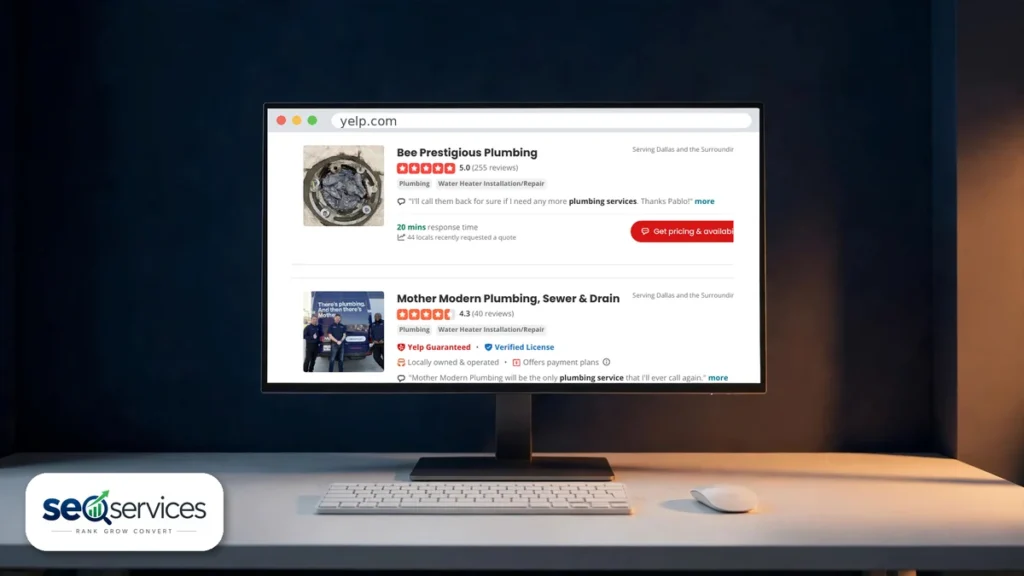
Citations sound technical, but the idea stays simple. They are public records of where your business is. Google compares those records before trusting your listing.
This guide explains the types, the right build order, and cleanup. You finish with accurate listings on sites that matter. You also skip the bulk submission traps.
Quick answer: A citation is any online mention of your business name, address, and phone number. Build them in tiers, starting with Google, Apple, and Bing. Keep every detail identical to one master record. Fix old data before adding new listings.
What Counts as a Citation?
A full citation shows three core details together. Those details are name, address, and phone number. Marketers shorten that trio to NAP.
A partial citation shows only one or two details. A news story naming your shop and street counts partially. Partial mentions still support your local presence.
Citations do not need a website link to count. Google reads the details themselves as evidence. A link helps visitors, but the data matters most.
Your own website footer is not a citation. Citations live on third-party sites and platforms. Your site holds the master record they should match.
Do citations need a link to my website to count?
No, a citation counts without any clickable link. Google verifies your details from the text itself. Directory profiles, map listings, and news mentions all qualify. A website link still helps customers reach you faster. Add one wherever the platform allows it. Never skip a good listing over a missing link.
Structured and Unstructured Citations
Structured citations sit inside listing fields on platforms. Directories, map apps, and review sites use this format. Each detail gets its own labeled box.
Unstructured citations appear inside normal page content. Blog posts, event pages, and news stories hold them. The details sit inside sentences instead of fields.
Both types support your local visibility. Structured listings carry the most weight for accuracy checks. Unstructured mentions add local trust and context.
Most SEO guides explain this split the same way. The key point stays consistency across both types.
Google ranks local results by relevance, distance, and prominence. Its local ranking guide explains those three factors. Accurate citations support the trust behind prominence.
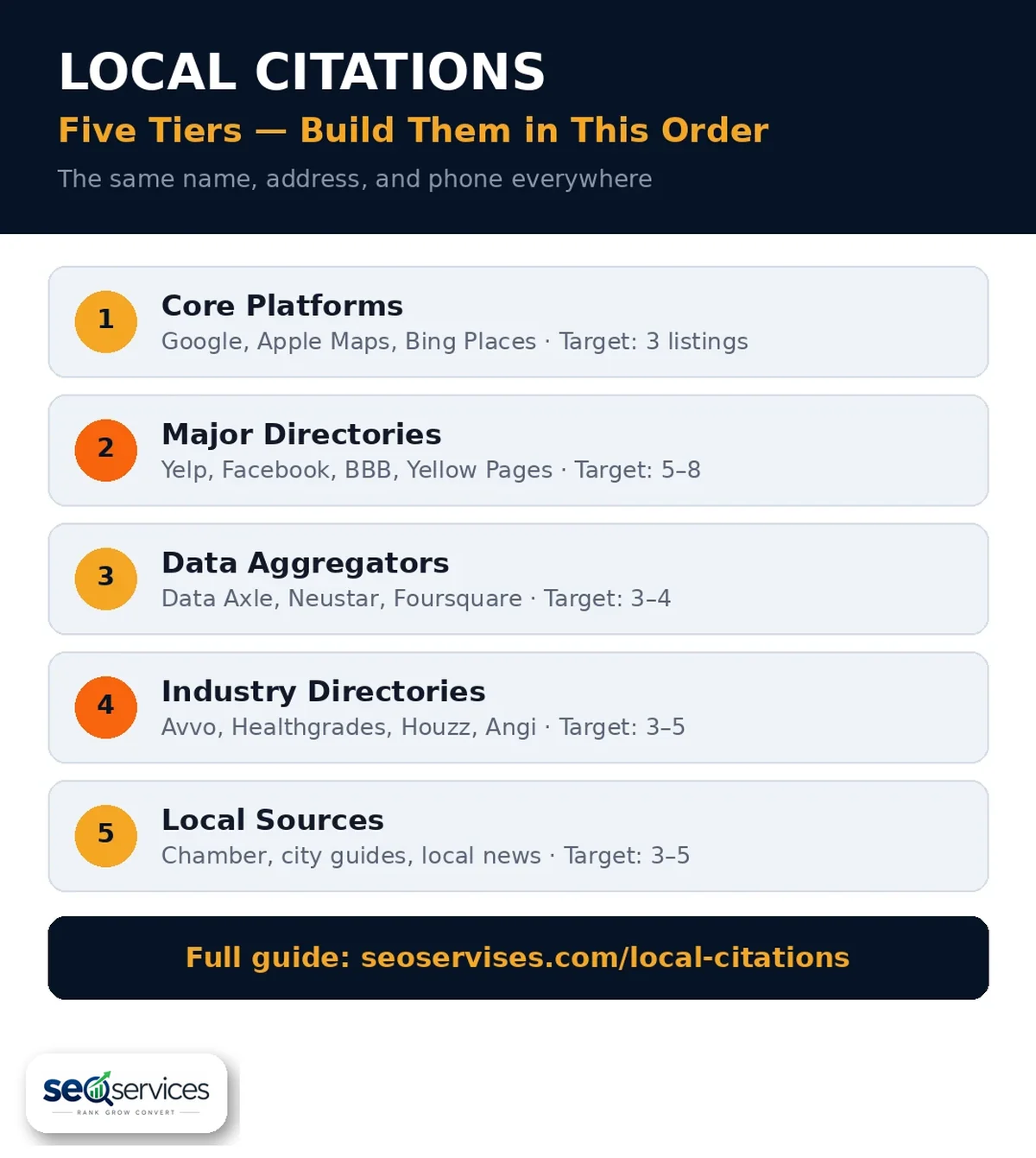
Table 1: Citation Tiers in Build Order
Build from the top tier downward. Each tier matters less than the one above.
| Tier | Examples | Target count |
|---|---|---|
| Core platforms | Google, Apple Maps, Bing Places | 3 |
| Major directories | Yelp, Facebook, BBB, Yellow Pages | 5-8 |
| Data aggregators | Data Axle, Neustar, Foursquare | 3-4 |
| Industry directories | Avvo, Healthgrades, Houzz, Angi | 3-5 |
| Local sources | Chamber, city guides, local news | 3-5 |
Step 1: Create Your Master NAP Record
Write your exact business details in one document first. This master record controls every listing you touch. Guessing formats listing by listing creates errors.
Decide small details once and never vary them. Suite formatting, street abbreviations, and phone style all count. “Suite 200” and “Ste. 200” look different to software.
Save the record where your whole team finds it. Staff, agencies, and freelancers should all copy from it. One shared source prevents most citation drift.
Step 2: Claim the Core Platforms
Start with Google Business Profile, Apple Maps, and Bing Places. These platforms feed maps, apps, and voice assistants. Errors here spread further than anywhere else.
Claim each profile with your business accounts. Verify ownership through each platform’s process. Then paste your master details into every field.
Complete every optional field each platform offers. Hours, categories, services, and photos build trust. Our guide to Google Business Profile optimization covers the Google setup fully.
Step 3: Add Major Directories and Aggregators
Next, build listings on Yelp, Facebook, and the BBB. Customers check these sites before calling many businesses. Their data also feeds other platforms.
Submit your details to the main data aggregators too. Aggregators supply hundreds of smaller directories and apps. One correct aggregator record fixes many downstream listings.
Expect aggregator changes to take several weeks. Their data cycles move slower than direct edits. Record submission dates in your tracking sheet.
Step 4: Add Industry and Local Sources
Industry directories reach buyers who already compare providers. A listing on Avvo matters for law firms. Healthgrades matters for clinics, Houzz for remodelers.
Local sources add community proof search engines value. Join your chamber of commerce directory. Sponsor a youth team or charity event page.
Pick quality over volume in this tier. Five relevant listings beat fifty random directories. Ask where your customers actually search and compare.
How many local citations do I actually need?
Most small businesses need twenty to forty quality listings. Cover ten to fifteen core platforms perfectly first. Add twenty to thirty secondary and industry listings next. No magic number guarantees rankings or map placement. Accuracy beats raw count at every tier. Ten perfect listings outperform one hundred sloppy ones.
What is the difference between a citation and a backlink?
A citation publishes your business contact details online. A backlink is a clickable link to your website. Some listings contain both citation data and a link. News mentions can carry details with no link. Google uses citations to verify location facts. It uses backlinks to judge site authority.
Step 5: Track Everything in One Sheet
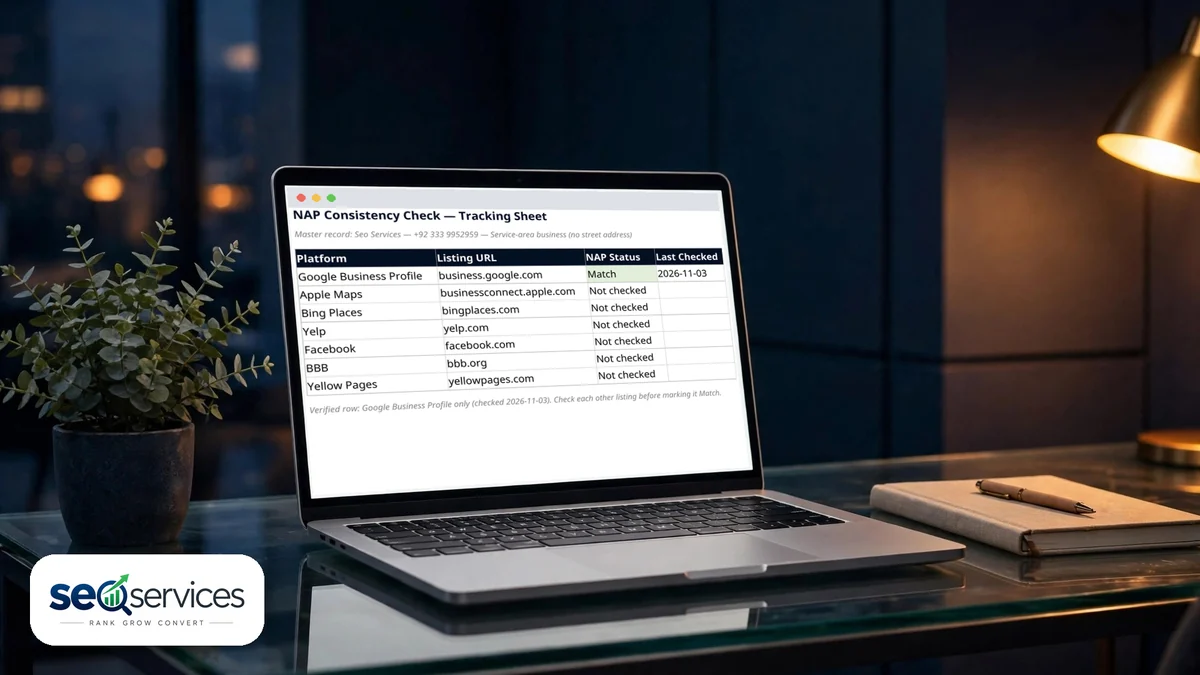
Create a simple tracking sheet before building more listings. Columns should cover platform, URL, login, and status. Add NAP status and last checked date.
The sheet turns cleanup into a quick routine. Without it, you rebuild the same list yearly. Teams also avoid duplicate work with shared tracking.
How to Clean Up Wrong and Duplicate Listings
Old data survives moves, rebrands, and phone changes. Cleanup matters more than new listings for many businesses. Start with the errors customers see most.
Search your business name plus your city first. Then search your old phone number alone. Old numbers reveal forgotten listings fast.
Fix core platforms before minor directories. Claim each wrong listing, then edit or report it. Some sites need documents proving the change.
Merge or remove duplicate listings where platforms allow. Duplicates split reviews and confuse search engines. Google’s Business Profile help center explains duplicate handling steps.
What is the fastest way to fix inconsistent NAP data?
Start by writing one exact master record today. Fix Google first, then Apple and Bing profiles. Work outward by site traffic and customer use. Search your old phone number to find stragglers. A focused owner clears core errors within days. Full web cleanup usually takes several weeks.
Table 2: Common Citation Errors and Fixes
| Error | Why it hurts | Fix |
|---|---|---|
| Old phone number listed | Customers call a dead line | Claim listing and update it |
| Suite or street mismatch | Software reads two locations | Match master record exactly |
| Duplicate listings | Reviews and trust split apart | Merge or request removal |
| Wrong business name style | Keyword-stuffed or outdated names | Use legal trading name only |
| Closed location still live | Buyers visit a shuttered shop | Mark closed or remove it |
Moves, Rebrands, and Phone Changes
Treat every business change as a citation project. Update your website and Google profile on day one. Then work through your tracking sheet by tier.
Keep your old details in the sheet too. Searching old data finds listings needing updates. Delete the old record only after cleanup ends.
Allow four to twelve weeks for full propagation. Aggregators and small directories update on slow cycles. Check core sites weekly until they match.

What a Strong Listing Contains Beyond NAP
Core details get a listing counted and verified. Extra fields turn that listing into a selling tool. Customers compare complete profiles before they call anyone.
Add a clear business category on every platform. Categories tell customers and Google what you actually do. Pick the same primary category everywhere it exists.
Write a short description using your master facts. Name your main services and the areas you serve. Keep the wording honest and free of hype.
Add your opening hours, including holiday changes. Wrong hours anger customers faster than almost anything else. Update hours before every major holiday period.
Upload real photos of your shop, team, and work. Fresh photos make a listing feel active and safe. Even three good photos beat an empty profile.
Link each listing to the right landing page. Multi-service businesses should link to matching service pages. Location businesses should link to their location page instead.
Citations and Reviews Grow Together
Many citation platforms also host customer reviews. Yelp, Facebook, and Google profiles all carry both. Building the listing starts the review opportunity.
A complete profile earns more trust from reviewers. Customers review businesses that look real and current. Empty profiles collect fewer and weaker reviews.
Reply to reviews on each major platform regularly. Owners often watch Google reviews and ignore Yelp completely. Every public reply shapes the next buyer’s choice.
Never move reviews between platforms or fake them anywhere. Platforms detect copied and paid review patterns quickly. Losing a profile costs far more than slow growth.
Risks of Bulk Submission Services
Cheap services promise hundreds of listings in days. They often create duplicates, typos, and wrong categories. Cleanup later costs more than careful building today.
Is it bad to have too many citations?
Extra listings add little once core tiers look clean. Each listing becomes another record to maintain forever. Bulk services create the real risk for owners. Their errors and duplicates damage trust signals. Stop building when relevant platforms are covered. Spend later effort on reviews and content instead.
Keep Citations Accurate Over Time
Check your top listings every three months. Set a calendar reminder and work the sheet. Fifteen minutes catches most new errors early.
Repeat checks after any staff or service change. New team members sometimes edit listings casually. One shared master record prevents those mistakes.
Our local SEO audit guide includes citations in its wider checks. Run that full review twice each year.
Busy owners often hand citation work to specialists. Our local search team builds and cleans listings monthly. Either way, accuracy stays the whole job.
Ready to Clean Up Your Business Listings?
Start with your master record and core platforms today. Fix the listings your customers actually use first.
Stuck with duplicates or years of old data? Contact us for a citation cleanup plan. You get a clear error list and fix order.
Frequently Asked Questions
What is a local citation in plain terms?
It is any online place naming your business details. Directory profiles and map listings count as citations. Mentions inside articles and event pages count too. The core details are name, address, and phone. No website link is required for it.
What is the difference between a citation and a listing?
A listing is one full profile on one platform. Your Yelp page is a business listing. A citation is any mention of your details anywhere. Every listing is also a citation by definition. Not every citation is a full listing, though.
Do citations directly affect map pack rankings?
Citations help Google verify your location and legitimacy. They form one signal among profiles, reviews, and distance. Clean citations alone cannot win the map pack. Wrong citations can hold a good business back. Treat them as foundation work, not magic.
How long do citations take to improve rankings?
Most businesses see effects within four to twelve weeks. Core platforms update and influence results much faster. Small directories and aggregators move far more slowly. Market competition also shapes your timeline heavily. Keep checking core listings while you wait.
Do citations help businesses with no storefront?
Yes, service-area businesses still need accurate citations. Plumbers, cleaners, and electricians benefit from consistent details. Match every listing to your profile setup exactly. Hide your home address where platforms require it. List service areas instead of a fake storefront.