
BLOG • LOCAL SEO
How to Do a Local SEO Audit in 9 Steps
Your business can look fine and still lose local customers daily. A wrong category, old phone number, or weak review profile hides you. Competitors in the map pack often win on basics, not budgets.

An audit finds those gaps in a fixed order. You check each local signal, score it, and list the fixes. Then you repair the highest-impact problems first.
This is a diagnostic process, not a setup guide. If you need the full setup routine, start with our local SEO checklist for small businesses. It covers building each piece from scratch.
Quick answer: Work through nine checks in order. Start with your Google Business Profile and citation accuracy. Then review ratings, location pages, and map grid visibility. Finish with backlinks, technical basics, and a ranked fix list. Most single-location audits take two to four hours.
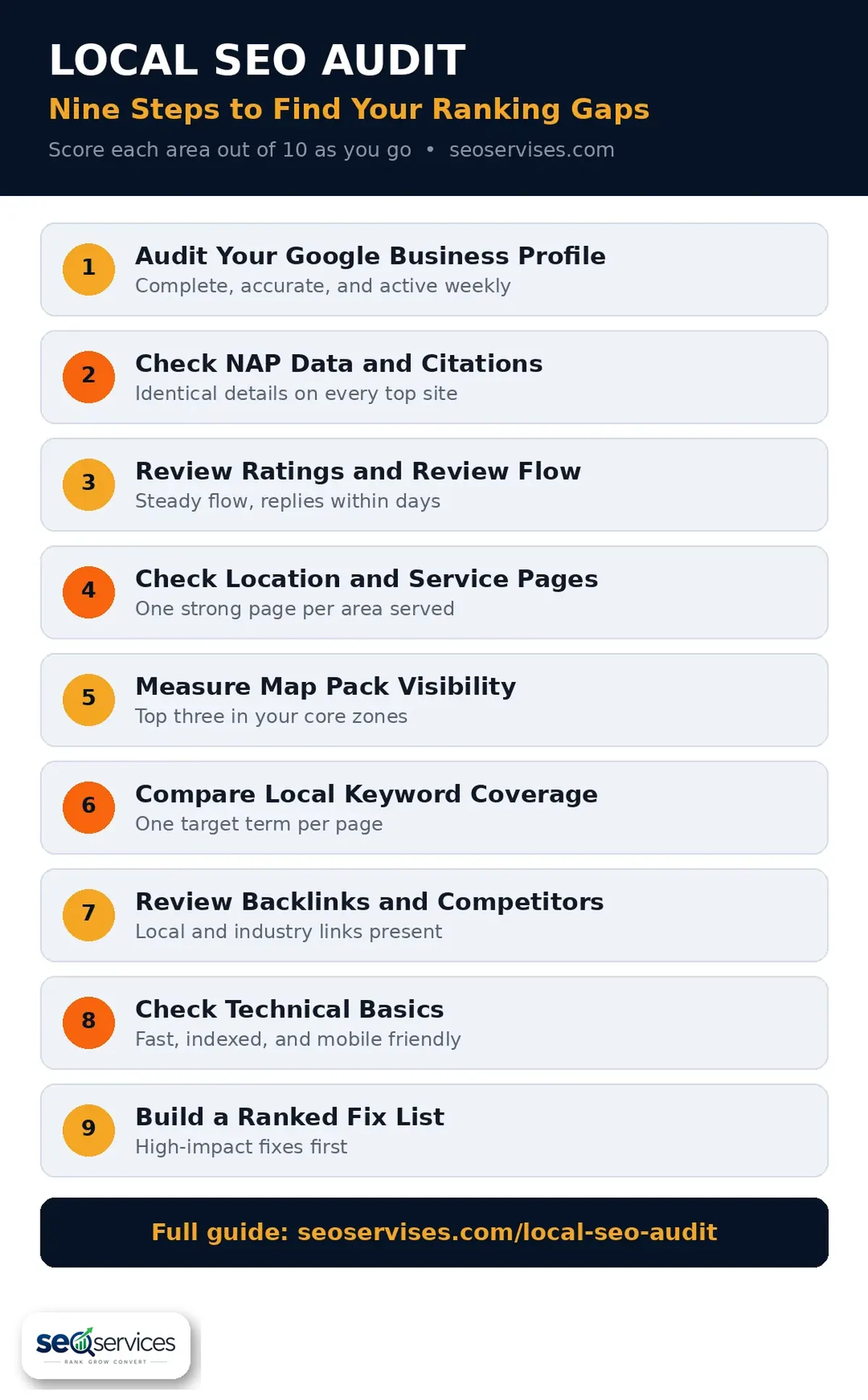
The nine steps at a glance:
- Audit your Google Business Profile
- Check NAP data and citations
- Review your ratings and review flow
- Check location and service pages
- Measure map pack visibility by area
- Compare local keyword coverage
- Review local backlinks and competitors
- Check technical basics that block locals
- Build a ranked fix list
Table 1: The Audit Scorecard
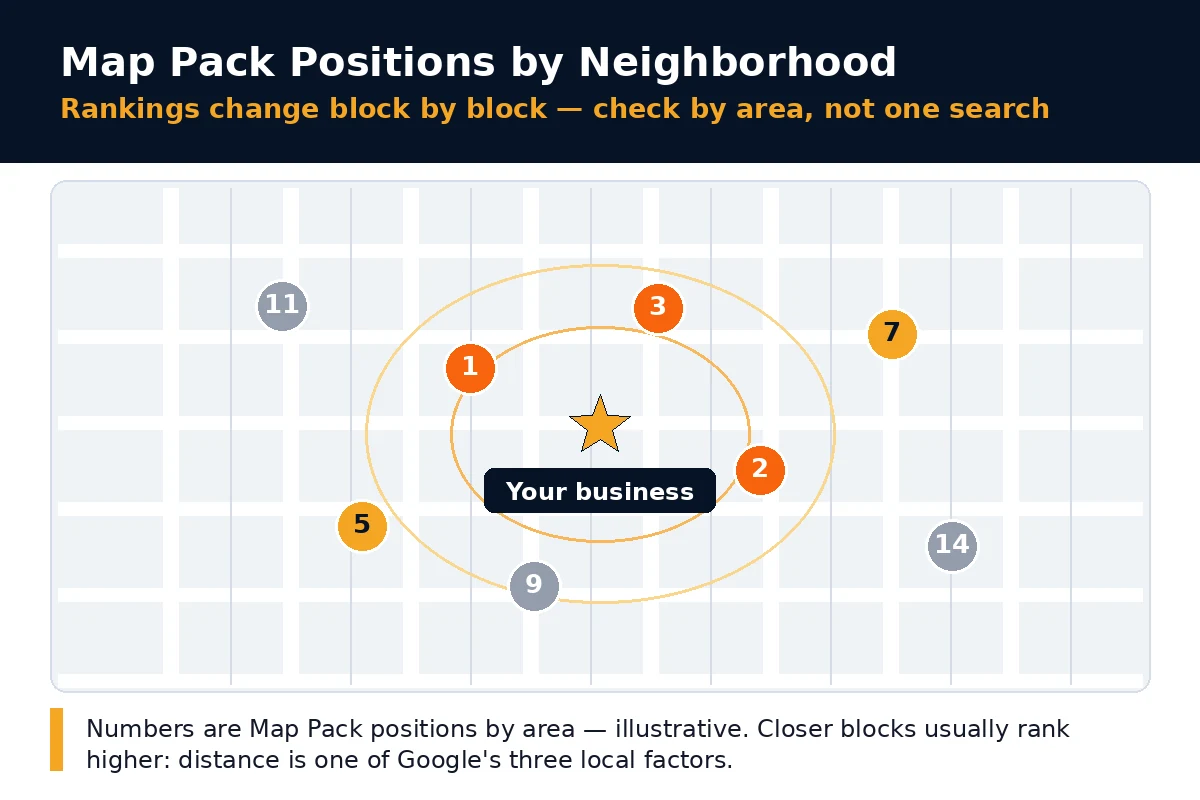
Score each area before you fix anything. Honest scores stop random work later.
| Area | What good looks like | Your score /10 |
|---|---|---|
| Google Business Profile | Complete, accurate, active weekly | |
| Citations and NAP data | Identical details on top sites | |
| Reviews | Steady flow, replies within days | |
| Location pages | One strong page per area | |
| Map visibility | Top three in core zones | |
| Local keywords | One target term per page | |
| Backlinks | Local and industry links present | |
| Technical basics | Fast, indexed, mobile friendly |
Step 1: Audit Your Google Business Profile
Start with the profile that drives most local calls. Google shows it in Maps and the map pack. Small errors here cost more than most website flaws.
Check your primary category first. A plumber listed as a general contractor loses relevance fast. Add secondary categories only where they truly fit.
Compare name, address, and phone with your website. Every character should match your master record. Fix mismatched suite numbers and old phone numbers.
Review your hours, including holiday hours. Wrong hours create angry customers and lost trust. Update special hours before every major holiday.
Check your services list and service areas. List every core service with clear names. Remove services you no longer offer.
Count your photos and their age. Real team and job photos beat stock images. Add fresh photos if the newest one looks old.
Open your profile as a customer sees it. Search your main service plus your city. Note anything missing, wrong, or unclear.
What are the most common issues found in a local SEO audit?
Wrong primary categories lead the list for most businesses. Old phone numbers and addresses come next. Thin location pages and stalled reviews follow closely. Duplicate listings also appear often after moves or rebrands. Most audits find five to eight fixable issues. Few of them need a developer or paid tools.
Step 2: Check NAP Data and Citations
NAP means name, address, and phone number. Search engines compare these details across the web. Conflicting details weaken trust in your business.
List your top twenty citation sites in a sheet. Include Yelp, Facebook, Apple Maps, and Bing Places. Add industry directories for your trade.
Open each listing and compare every field. Mark each one correct, wrong, or duplicate. Note the login or claim path for each fix.
Search your old address and old phone number. Old data hides on sites you forgot years ago. Each stale listing becomes a cleanup task.
Claim unclaimed listings before editing them. Claimed profiles let you control future changes. They also block strangers from suggesting wrong edits.
Step 3: Review Your Ratings and Review Flow
Reviews shape rankings and buying choices together. Google weighs count, rating, recency, and your replies. Buyers read the newest reviews first.
Record your rating and review count today. Compare both numbers with your top three competitors. A big gap here explains many ranking gaps.
Check your review velocity over six months. A steady flow beats one old burst. Fifty recent reviews often beat two hundred stale ones.
Read your last twenty reviews closely. Note repeated complaints about parking, waits, or staff. Those patterns point to real service fixes.
Check your reply rate and reply speed. Reply to every review within two business days. Short, calm replies build trust with future readers.
Confirm you never pay for reviews or gate them. Google bans fake engagement and selective review requests. One penalty can remove your reviews entirely.
Step 4: Check Location and Service Pages
Your website must prove where you work. One contact page rarely carries that proof alone. Each core service needs clear local signals.
List every service and area you serve. Match each pair to a real page. Flag pairs with no page or thin pages.
Read each location page top to bottom. It should name the city, neighborhoods, and local jobs. Generic text copied across cities helps nobody.
Check titles, headings, and opening lines. Each page should target one service and one area. Two pages chasing one term split your strength.
Look for your NAP data in the footer. Add LocalBusiness schema with matching details. Google explains local ranking factors in its guide to local ranking on Google.
Confirm each page links to booking or contact options. Local visitors act fast on mobile phones. Burying your phone number loses ready buyers.
Step 5: Measure Map Pack Visibility by Area
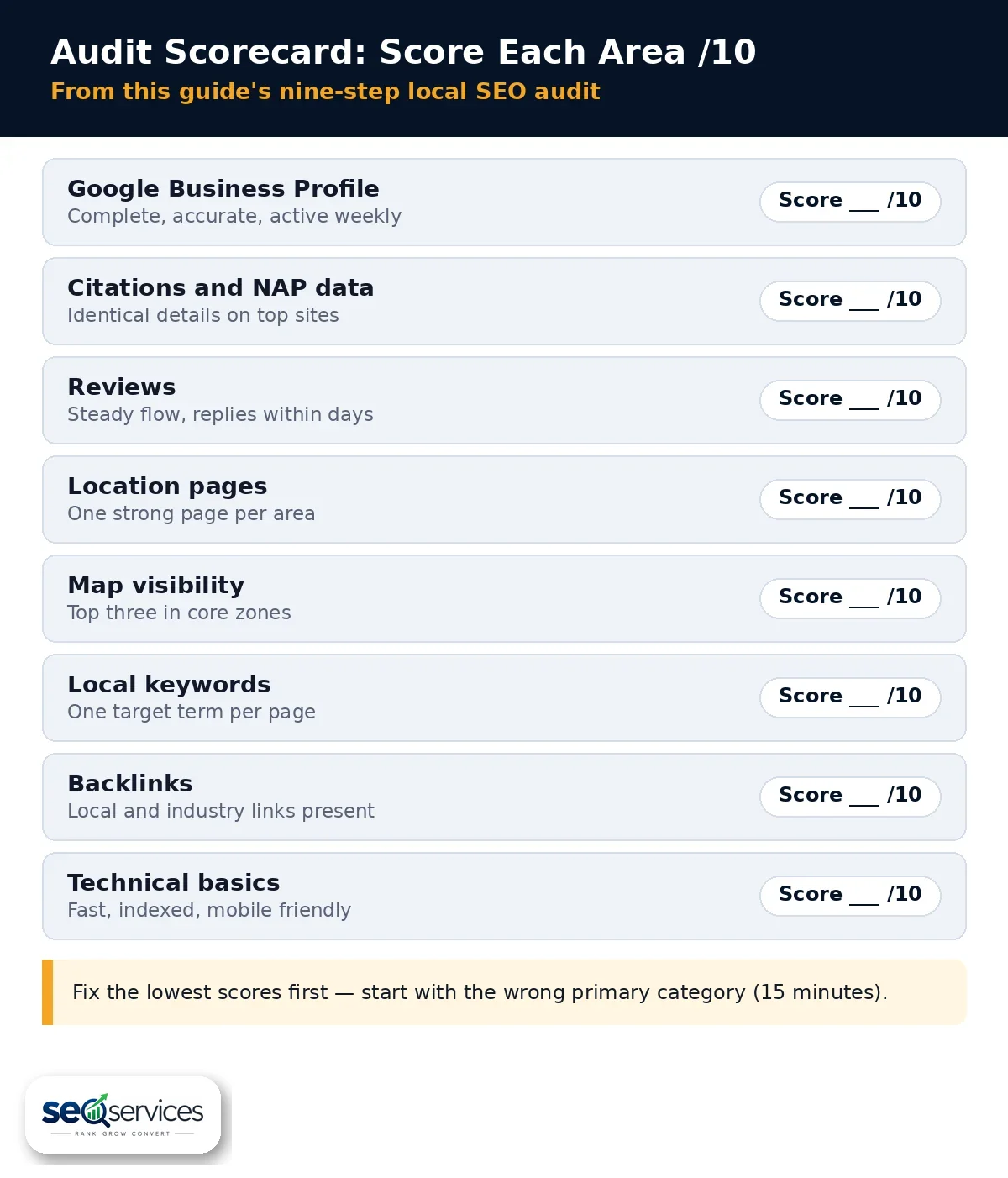
Rankings change from street to street. One citywide ranking number hides the real picture. You need a grid view of your visibility.
Pick your five money keywords first. Use service plus city terms customers actually type. Skip brand searches for this check.
Run a geo-grid scan with a rank tracker. Tools like BrightLocal show rankings by map point. Free checks work too, but they take longer.
Record where you rank in the top three. Mark zones where competitors own the pack. Those zones become your growth targets.
Repeat the scan from your store location. Distance shapes results more than many owners expect. Your home ranking rarely matches customer rankings elsewhere.
Save the grid report with today’s date. Future audits compare against this baseline. Without a baseline, progress claims mean nothing.
What do I check first in a local SEO audit?
Check your Google Business Profile before anything else. It drives map pack visibility and most local calls. Confirm the primary category, NAP data, and hours first. Those three fields shape relevance and trust daily. A broken profile makes later fixes work harder. Fix profile errors in the first audit hour.
Step 6: Compare Local Keyword Coverage
Now compare your pages with ranking competitors. Open the top three results for each money keyword. Note their page type, length, and local proof.
Build a simple coverage table in a sheet. Rows list keywords, columns list you and competitors. Mark who has a dedicated page for each term.
Look for services competitors push that you bury. A buried service cannot rank well. Give it a page or a strong section.
Check search intent behind each keyword. Some terms want a booking page, others want advice. Matching intent matters more than repeating phrases.
Review your Search Console queries for local terms. Find pages with impressions but weak clicks. Weak titles often cause that pattern.
Step 7: Review Local Backlinks and Competitors
Local links prove real community presence. A chamber listing or local sponsorship carries local weight. National directory spam carries almost none.
Export your backlink list from Search Console. Sort domains and scan for local sources. Note news, schools, charities, and trade groups.
List links your top competitors have that you lack. Shared gaps show realistic link targets. Local partners often link to several rivals already.
Check for links pointing to dead pages. Dead targets waste hard-earned link value. Redirect or restore those pages promptly.
Note your review and link gaps together. This full picture shapes your ninety-day plan. Our team handles this comparison inside our local search marketing services for busy owners.
Step 8: Check Technical Basics That Block Locals
Local audits skip deep code work on purpose. Still, basic technical flaws can hide local pages. Check the blockers, not every warning.
Confirm your location pages sit in the index. Use Search Console URL Inspection on each one. Blocked or missing pages cannot rank anywhere.
Test your site speed on a phone connection. Local searches happen mostly on mobile devices. Slow pages lose callers before content loads.
Check that tap-to-call works on every page. Test the button yourself on a real phone. Broken call buttons waste your best traffic.
Review your sitemap for old location URLs. Remove deleted pages and fix wrong links. Clean sitemaps help Google crawl what matters.
A full technical audit goes deeper when these basics fail. Keep this audit local in scope, though.
Step 9: Build a Ranked Fix List
Raw findings help nobody without priorities. Turn every issue into one clear task. Add an owner and a deadline for each.
Sort fixes by impact first, effort second. Category and NAP fixes usually lead the list. New content and link work come after accuracy.
Table 2: Fix Priority Guide
| Fix | Impact | Typical effort |
|---|---|---|
| Wrong primary category | High | 15 minutes |
| NAP errors on top listings | High | 1-2 hours |
| Duplicate listings | High | 1 week of claims |
| Thin location page rewrite | Medium | Half a day |
| Review request routine | Medium | 1 hour setup |
| New local backlinks | Medium | Ongoing monthly work |
| Extra photos and posts | Low | 30 minutes monthly |
Set a thirty, sixty, ninety day order. Accuracy fixes belong in the first month. Content fixes fit month two best. Link and review systems run from month three.
Which tools work best for this audit?
Start with free tools from Google itself. Search Console and your Business Profile dashboard cover basics. BrightLocal adds grid tracking and citation checks affordably. Whitespark helps find citation gaps and local links. Screaming Frog scans your location pages for errors. Most single-location owners need only two paid tools.
How often should I perform a local SEO audit?
Run a full audit twice each year. Add one after any move, rebrand, or phone change. Quick monthly checks cover reviews, hours, and rankings. Major Google updates also justify a fresh review. Most owners miss changes between yearly audits. Twice-yearly checks catch drift before rankings fall.
How much does a local SEO audit cost?
DIY audits cost only your time and tool fees. Expect two to four hours for one location. Agencies often charge 500 to 2,500 dollars per audit. Price depends on locations, depth, and reporting detail. Multi-location brands pay more for grid data. Ask any provider for a sample report first.
Turn Findings Into Rankings
An audit only pays off through finished fixes. Work the ranked list weekly until it clears. Then measure map movement against your saved baseline.
Rankings rarely jump from one fix alone. Gains come from stacked small corrections over weeks. That pattern matches how local trust builds online.
Keep notes on every change you make. Dates help you link gains to real actions. Guessing wastes the next audit cycle.
Stuck below the pack after honest fixes? Study how competitors earn the top spots in our map pack ranking guide. It shows the ranking work that follows diagnosis.
Ready to Find Your Local Ranking Gaps?
You can run this audit with a spreadsheet and patience. Or you can hand the whole check to our team.
Contact us for a clear local audit report. You get scored findings, ranked fixes, and honest timelines. No jargon, no padded task lists.
Frequently Asked Questions
What is a local SEO audit?
It is a structured review of your local search presence. The review covers your profile, citations, reviews, and pages. It also measures map rankings across your service area. Findings become a ranked list of fixes. Owners use it to stop guessing about visibility.
Can I do a local SEO audit myself?
Yes, most owners can run the core checks themselves. You need Search Console, a spreadsheet, and focused time. Free tools cover profile, citation, and indexing checks. Paid tools only speed up grid and citation scans. Help matters most for multi-location brands.
How long does the full audit take?
A single location usually takes two to four hours. Larger sites with many location pages take longer. Citation cleanup can add days of claim work. The audit itself stays short, fixes take longer. Set aside one quiet morning for yours.
What should an audit include for a local business?
It should include profile accuracy and citation consistency checks. Add reviews, location pages, and map visibility measurements. Backlink and competitor comparisons complete the picture. Quora practitioners list the same core areas. Tracking setup also matters for proving results later.
Does this audit help service-area businesses?
Yes, plumbers and cleaners benefit as much as shops. Hide your home address and set service areas correctly. Citations should match your profile setup exactly. Location pages carry extra weight without a storefront. Grid scans show where your crews actually win.





One Comment