BLOG • WEB DESIGN
How Much Does a Small Business Website Cost in 2026?
Three quotes for one website can differ wildly. One says $800 and another says $9,000. Both quotes can be honest for different scopes.
This guide explains where the money actually goes. You will see US market planning ranges by build route. It pairs naturally with our web design services when you want help.
Quick answer: Most owners pay $200 to $800 yearly for a DIY builder site. Freelancers often charge $1,500 to $8,000 per build. Agencies often charge $5,000 to $25,000 or more. Hosting, domain, and maintenance add yearly costs on top.
The three build routes at a glance:
- DIY builder or self-built WordPress site
- Freelancer or small design studio
- Agency with a full project team
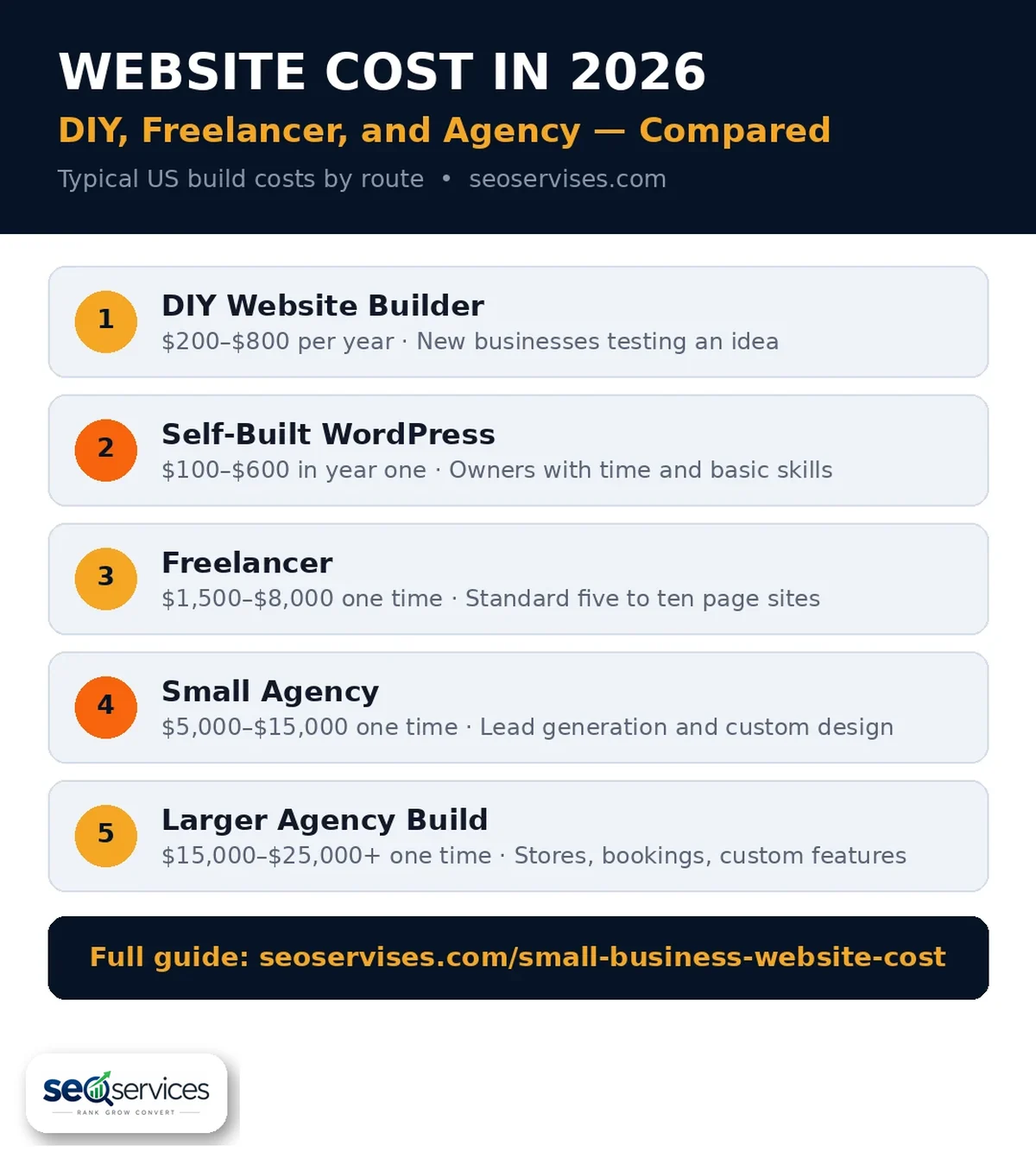
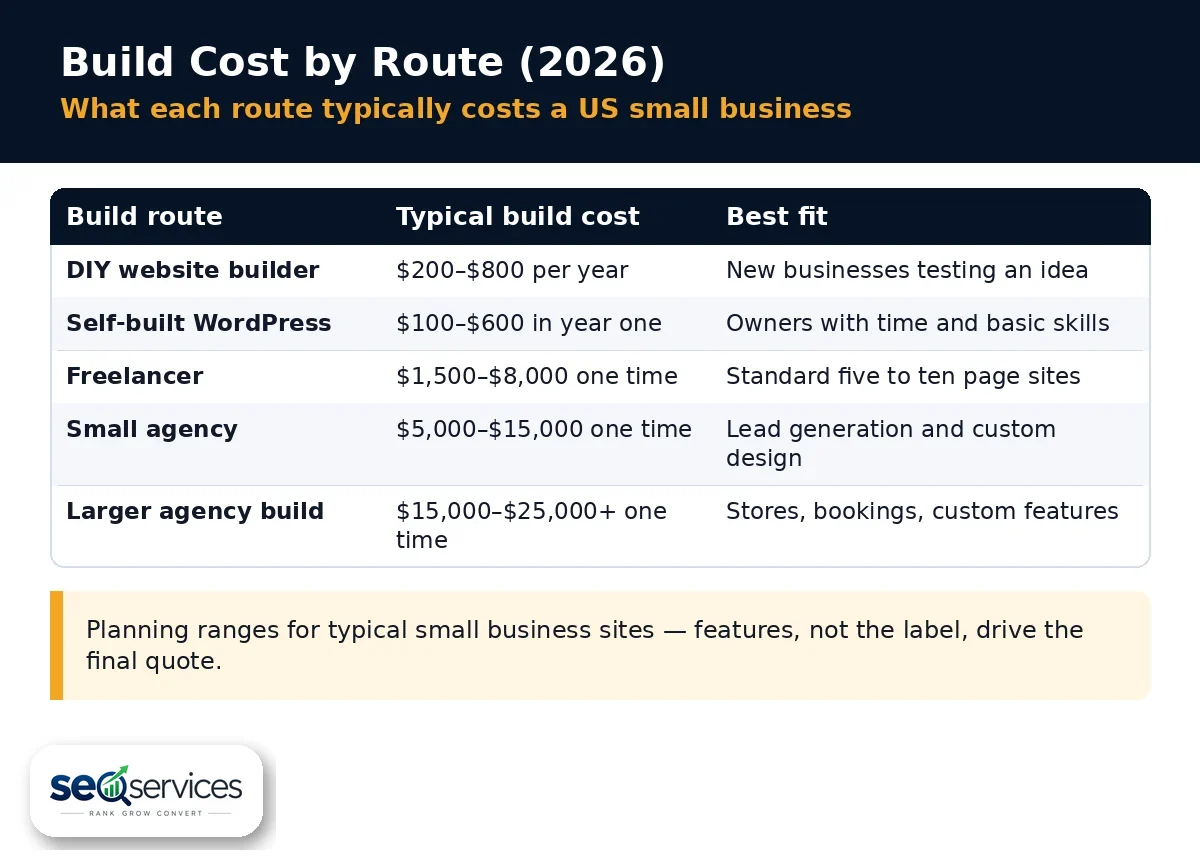
Table 1: Build Cost by Route
These ranges reflect general US market planning figures. Your scope decides where your project lands.
| Build route | Typical build cost | Best fit |
|---|---|---|
| DIY website builder | $200–$800 per year | New businesses testing an idea |
| Self-built WordPress | $100–$600 in year one | Owners with time and basic skills |
| Freelancer | $1,500–$8,000 one time | Standard five to ten page sites |
| Small agency | $5,000–$15,000 one time | Lead generation and custom design |
| Larger agency build | $15,000–$25,000+ one time | Stores, bookings, and custom features |
Route 1: Build It Yourself
DIY builders charge one monthly subscription fee. Wix, Squarespace, and similar tools bundle hosting inside. You supply the time, writing, and design choices.
Most owners spend twenty to forty hours building. That time carries a real business cost too. Your hours have value even without an invoice.
WordPress software itself costs nothing to download. You pay for hosting, a domain, and extras. The official WordPress.org site offers the software free. Premium themes and plugins add yearly fees.
DIY suits simple sites with few pages. A menu, services page, and contact form work fine. Complex features stretch DIY tools quickly.
Can I build a small business website for under $500?
Yes, a basic site can stay under $500. A builder plan, domain, and template cover year one. Your own time replaces most paid labor here. Expect twenty to forty hours of setup work. That route suits a new business testing demand. It rarely includes custom design or copywriting help.
Route 2: Hire a Freelancer
Freelancers charge per project or per hour. US rates often run $50 to $150 hourly. Project quotes bundle those hours into one price.
A template-based build sits at the low end. Custom layouts and copywriting push quotes higher. Experience in your industry also raises rates.
You work with one person from start to finish. Communication stays fast and direct most days. Availability after launch varies by person, though.
Ask what the quote includes in writing. Many quotes exclude copy, photos, and SEO setup. Those extras surprise owners at invoice time.
Route 3: Hire an Agency
Agencies charge for a team, not one person. Strategy, design, writing, and development sit together. Project management adds cost and structure both.
Agency builds suit revenue-driving websites best. Lead generation, bookings, and stores justify the spend. A simple brochure site rarely needs this level.
Timelines usually run one to three months. Revisions follow a set process and schedule. Support after launch often continues under a plan.
Should I hire a freelancer or an agency?
Pick a freelancer for a simple, standard site. Rates stay lower and communication stays direct. Pick an agency for strategy, copy, and complex features. Agencies bring a team and a clear process. Match the hire to your revenue goals. Never buy team overhead for a simple brochure site.
What Actually Drives the Price
Page count shapes the build cost first. Five pages cost far less than forty pages. Unique layouts cost more than shared templates.
Features add development hours very fast. Booking systems, payments, and member areas cost real money. A simple contact form costs almost nothing.
Copywriting hides inside many quote gaps. Writing ten pages takes days of skilled work. Supplying finished text lowers your build price.
Photography and branding move totals too. Stock photos cost little but look generic. Custom shoots and logo work add hundreds more.
SEO setup belongs in the first build. Titles, structure, and speed work prevent rebuilds later. Our website redesign SEO checklist shows what rushed builds miss. Fixing those gaps later costs owners more.
Why do website quotes vary so much?
Quotes vary because scopes rarely match at all. One quote may include copy, photos, and SEO setup. Another may cover design and build only. Page counts and custom features shift hours fast. Hosting and revisions may sit outside both quotes. Compare written line items, never just totals.
The Yearly Costs Nobody Quotes
Your build price covers launch day only. Running costs repeat every single year. Budget them before you sign any contract.
Domain names cost about $10 to $25 yearly. A standard .com sits in that range. Premium names cost far more each year.
Hosting ranges from $60 to $600 yearly. Shared plans sit at the low end. Managed WordPress hosting costs more but includes support.
SSL certificates often come free with hosting. Paid certificates add $0 to $200 yearly. Most small sites need the free option only.
Premium plugins and apps renew yearly too. Booking, forms, and store tools charge subscriptions. List every renewal before you commit.
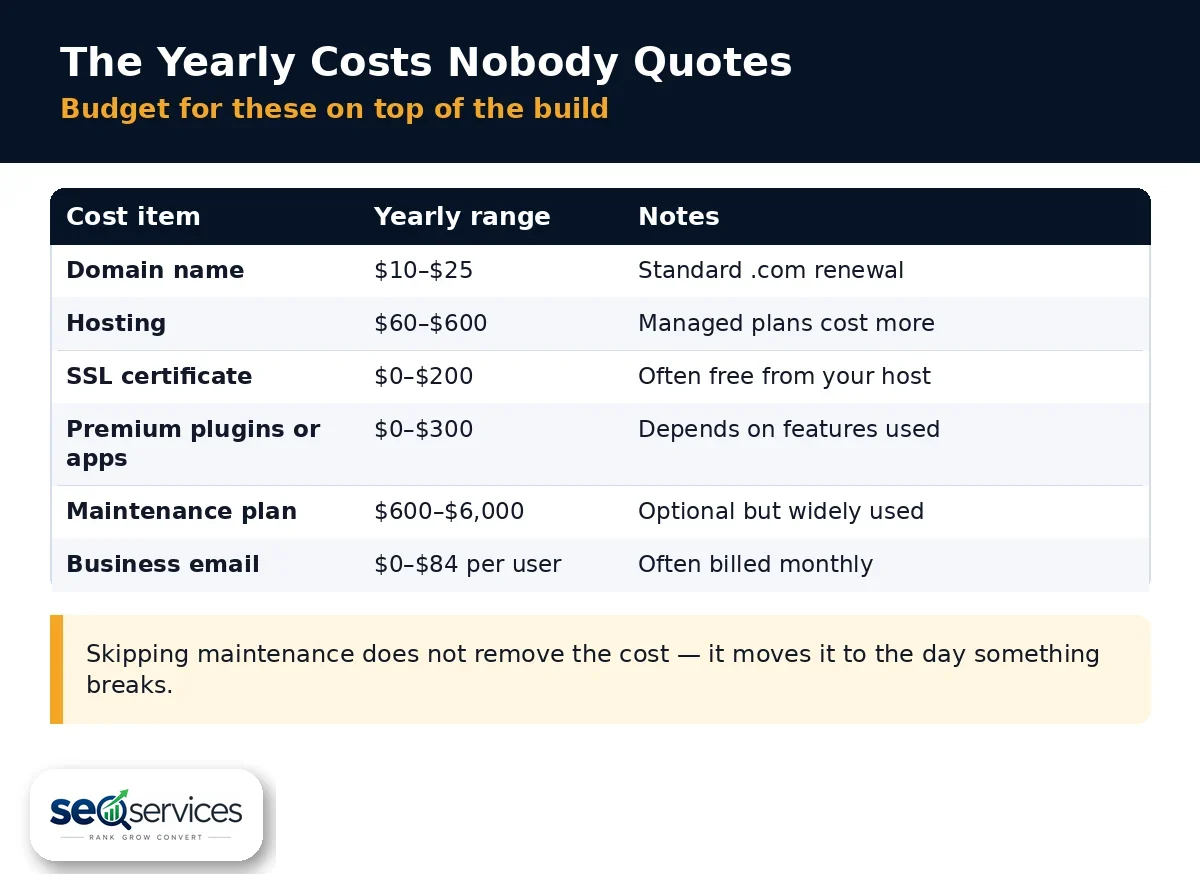
Table 2: Yearly Running Costs
Add these lines to every build quote you compare. Three-year totals often surprise first-time buyers.
| Cost item | Typical yearly range | Notes |
|---|---|---|
| Domain name | $10–$25 | Standard .com renewal |
| Hosting | $60–$600 | Managed plans cost more |
| SSL certificate | $0–$200 | Often free from your host |
| Premium plugins or apps | $0–$300 | Depends on features used |
| Maintenance plan | $600–$6,000 | Optional but widely used |
| Business email | $0–$84 per user | Often billed monthly |
What are the ongoing monthly costs of a small business website?
Most owners should plan for monthly running costs. Hosting, domain renewal, and basic tools add up fast. Many small sites spend about $30 to $200 monthly. Managed care plans often cost $50 to $500 monthly. Stores and booking sites usually sit higher. Ask every provider what their plan includes.
Maintenance: The Cost That Protects the Rest
Websites need updates, backups, and security checks. WordPress sites need plugin and theme updates monthly. Skipped updates invite hacks and broken pages.
Some owners handle upkeep in one hour monthly. Others pay a care plan instead. Plans often run $50 to $500 monthly.
Budget fifteen to twenty-five percent yearly. That share of build cost covers upkeep well. A $6,000 site needs about $900 to $1,500 yearly.
Content updates belong in that budget too. New photos, pages, and offers keep sites useful. Stale sites lose leads long before they break.
Is WordPress cheaper than Squarespace or Wix?
WordPress software itself costs nothing to download. Hosting, a theme, and plugins create the real bill. Builder plans bundle hosting and support into one fee. Year one totals often land surprisingly close together. WordPress wins on control and long-term flexibility. Builders win on simple setup and fewer updates.
How Site Type Changes the Budget
A one-page site costs the least overall. Freelancers often charge $300 to $2,000 there. It suits a single offer or campaign.
Standard service sites sit in the middle. Five to ten pages cover most local businesses. Expect $1,500 to $8,000 from a freelancer.
E-commerce stores cost the most by far. Product setup, payments, and shipping rules add hours. Builds often start near $5,000 and climb fast.
Custom features reset the budget completely. Quote calculators, portals, and integrations need developers. Each feature deserves its own written estimate.
SEO spending sits outside the build budget. Our guide on how much SEO costs breaks down that separate investment. Plan both budgets before launch day arrives.
What a Fair Quote Should Include
A fair quote names every deliverable in writing. Vague quotes hide the gaps you pay for later. Ask each provider to confirm these items.
Design work should name the number of layouts. It should state how many revision rounds apply. Template tweaks and custom design differ greatly.
Build work should list every page by name. It should cover mobile design for each page. Forms, maps, and click-to-call buttons belong there.
Content work needs its own clear line. Some quotes include writing and some exclude it. Photo sourcing and logo files need naming too.
Technical setup should cover the basics fully. That means analytics, Search Console, and basic SEO settings. Speed checks and security plugins belong there as well.
Training and handover deserve one line too. You should receive logins, files, and simple guidance. A short training call helps most owners greatly.
Red Flags in Cheap Quotes
Very low quotes usually cut hidden corners. The site may launch, but problems follow quickly. Watch for these warning signs before you sign.
No written scope means no real protection. Verbal promises vanish when the work gets hard. Every deliverable should appear on paper.
Ownership terms matter more than most owners think. Some builders keep your domain or site files. Leaving them later can cost hundreds more.
Missing SEO setup is another common gap. A pretty site that Google cannot read fails quietly. Ask who sets titles, structure, and analytics.
Support silence after launch signals future trouble. Ask how fixes and small edits get handled. Get the answer and the price in writing.
How to Set Your Own Budget
Start with the job your website must do. A lead machine deserves more than a brochure. Write that job in one plain sentence.
List must-have pages and features first. Mark nice-to-have items in a second column. Quotes get clearer with that simple split.
Get three quotes with identical written scopes. Compare line items side by side carefully. The cheapest quote often excludes the most.
Plan three years of total ownership cost. Add build, hosting, maintenance, and content together. That total beats any single quote for decisions.
Keep ownership of your domain and accounts. Your business should own every login and asset. That rule protects you at every future move.
A Simple Starter Budget Example
A plumber in Ohio needs six pages. She hires a freelancer for a custom template build. Her planning budget uses mid-range market figures.
Her small business website cost stayed predictable throughout. The scope stayed fixed from the first written quote. Year one hosting and domain add about $250. A basic care plan adds $100 monthly.
Her three-year total lands near $7,350 overall. That number guides her savings plan today. Your figures will differ with your scope.
Ready to Plan Your Website Budget?
You now know the real cost drivers. Ranges help you plan, but scope decides totals. A written brief earns you accurate quotes fast.
Our team can review your plans before you spend. We will flag missing costs and oversized features early. Contact us for a free first review today.
Frequently Asked Questions
How much does a basic small business website cost in 2026?
A basic site costs $200 to $1,500 in general US ranges. DIY builders cover the low end of that range. Freelancer builds usually start around $1,500 for basic work. Most professional sites land between $1,500 and $3,000.
How much does an e-commerce website cost?
Stores typically cost $3,500 to $15,000 to build. Platform fees add $30 to $300 monthly after launch. Custom WooCommerce builds often start near $5,000. Product count and payment needs drive the total.
Is a $500 website good enough for a small business?
A $500 site works as a starting point only. It usually means a DIY build with your time. Custom design and SEO structure rarely fit that budget. Growing businesses usually outgrow it within two years.
What ongoing costs should I budget for after launch?
Budget for hosting, domain, security, backups, and maintenance yearly. Combined costs often run $1,100 to $5,000 per year. Care plans and premium tools set your final figure. Stores usually sit at the higher end.
Does a more expensive website always perform better?
No, price alone never guarantees better results. A clear strategy matters more than a big budget. Fast, focused pages beat costly decoration every time. Match spending to the revenue your site must earn.