
BLOG • LINK BUILDING
How to Build Backlinks for a Small Business Website Safely
Backlinks still move rankings for small sites. One good link can lift a service page. Ten bad links can drag it down instead. The method you choose matters more than volume.

Many owners learn this lesson the hard way. They buy cheap links from a bulk seller. Rankings jump for a month, then slide for a year. Recovery takes far longer than the shortcut saved.
This guide covers the safe route only. Every method here follows Google rules fully. Each one suits a small budget and small team. You will also learn how to vet sites first.
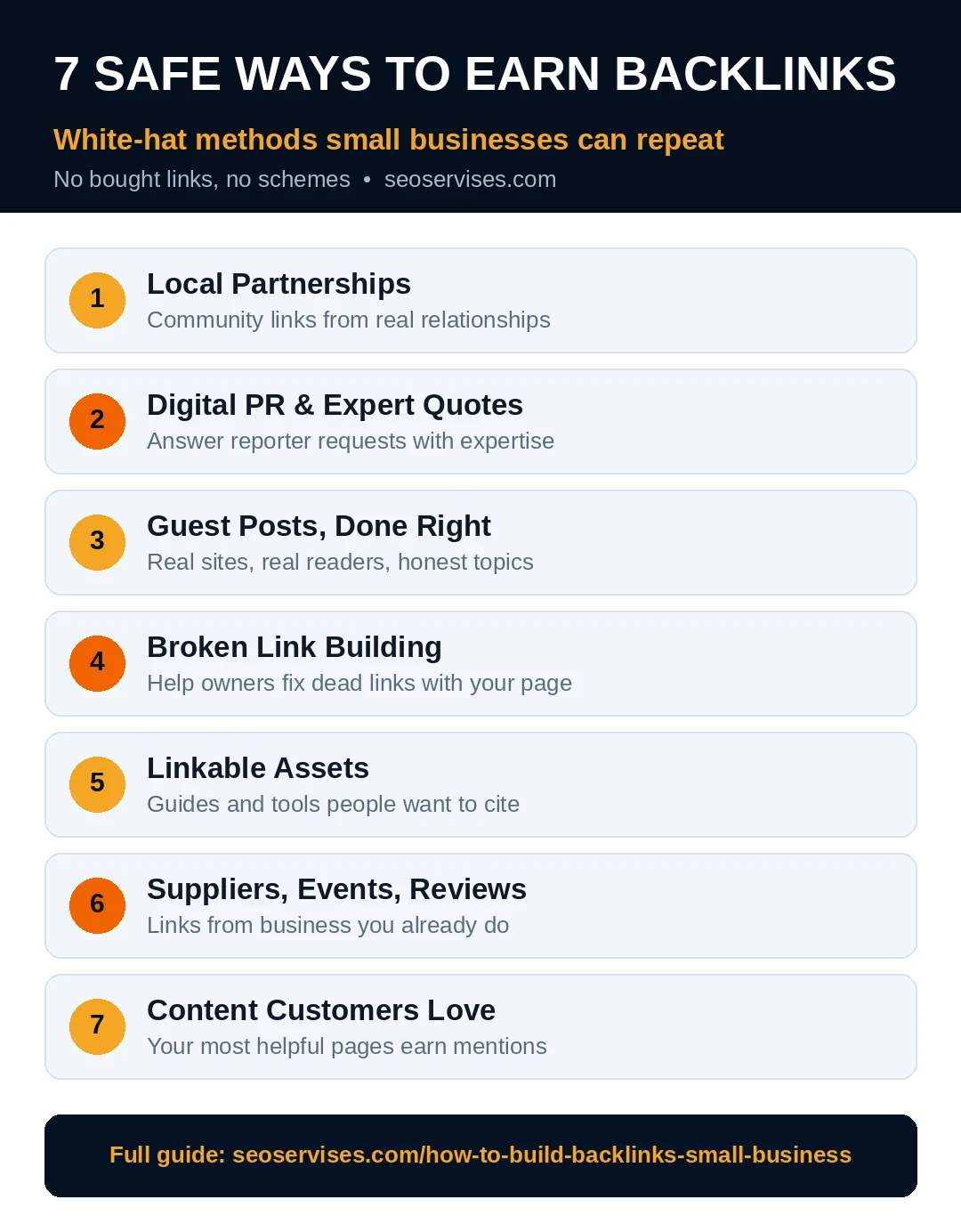
Quick answer: Earn links with helpful content and real relationships. Start with local partners, suppliers, and community groups. Add digital PR, guest posts, and broken link fixes. Never buy links built to pass rankings. One relevant link beats fifty random ones.
The safe system at a glance:
- Learn the rules Google enforces on links
- Pick the pages that deserve links most
- Vet every site before you reach out
- Earn local links from real relationships
- Use PR, guest posts, and resource pages
- Track every link and review results monthly
Safety Rules First: What Google Allows
Google treats links as votes of trust. It wants those votes earned, not bought. Paid links built for rankings break its rules. Hidden links and bulk schemes break them too.
Read the official link schemes guidance before you start. It lists the patterns Google counts as spam. Large link networks and paid posts sit on it. So do links stuffed into widgets and footers.
Use one simple test for any link. Would this link make sense without search engines? A trade blog linking your guide passes that test. A random footer link on a casino site fails. If you would hide it from customers, skip it.
Table 1: Safe Tactics vs Risky Tactics
| Safe and allowed | Risky and banned |
|---|---|
| Guest post on a relevant trade blog | Paid post built only for a ranking link |
| Link from a local chamber directory | Link from a private blog network |
| Supplier page listing its real dealers | Bulk links from unrelated foreign blogs |
| News story quoting your expert comment | Comment spam with keyword anchor text |
| Resource page adding your free guide | Link exchange scheme with dozens of sites |
Paid links for ads are a separate case. Ads must use the sponsored attribute in code. That tag tells Google the link is advertising. It passes no ranking credit by design. Google explains the tags in its paid link guidance. Never accept a paid ranking link without that tag.
Step 1: Pick Pages That Deserve Links
Links help most when they point at value. Choose two or three target pages first. Service pages earn revenue but attract few links. Helpful guides attract links with far less effort.
Build one strong guide for each core service. A roofer in Houston can publish a storm repair guide. Local blogs and news sites can cite it easily. Then link that guide to the service page inside.
Strong internal links pass value across your site. A clear internal linking plan spreads guide value to services. It also shows readers a natural next step. Set those links up before outreach begins.
Fix slow or thin target pages first. No editor links to a page that loads poorly. Check the page on a phone yourself. Read it as a stranger with no patience. Improve weak pages before you pitch them anywhere.
Step 2: Vet Every Site Before Outreach
Not every willing site is a safe partner. Check four things before you pitch anyone. This check takes five minutes per site. It protects your site from bad company.
First, check relevance to your trade or town. A home services blog fits a plumber well. A gaming blog fits almost no local business. Relevance is the strongest quality signal you control.
Second, check real traffic and real content. Search the site name plus a recent post title. Real sites rank for their own content topics. Ghost sites with no traffic offer no value.
Third, scan their outbound links for patterns. Pages linking to casinos and loan sharks are risky. One such page is a warning sign. Many such pages mean walk away at once.
Fourth, read two full posts on the site. Good sites write for humans, not link buyers. Posts should name real authors and dates. Thin spun text means the site sells placements. Your link would sit in bad company there.
Method 1: Local Partnerships and Community Links
Your town is your easiest link source. Local partners already know and trust you. Their sites often link to firms they work with. These links carry strong local relevance signals.
List every group your business touches today. Chambers, trade groups, and charity boards count. So do sports teams you sponsor each year. Ask each one for a member or sponsor listing. Most groups maintain a page for exactly that.

Partner with firms beside your trade. A wedding venue can link its trusted florist. A realtor can link a trusted home inspector. Offer the same link back only when natural. Keep exchanges small, real, and reader-first always.
Can I build backlinks with no budget?
Yes, most early links cost time, not money. Partner listings and supplier pages are usually free. Expert quotes cost one thoughtful email reply. Broken link fixes cost research and a short pitch. Your budget buys tools and help, not the links. Time and relevance do the real work here.
Method 2: Digital PR and Expert Quotes
Reporters need expert voices every single day. Services like Connectively match reporters with sources. Answer queries in your trade with short, useful quotes. A used quote often earns a credit link.

Local news offers the same path at smaller scale. Pitch one clear story angle per season. A tax firm can share filing deadline tips. A gym can share January habit data from members. Real data makes your pitch stand out fast.
Unlinked brand mentions are hidden wins too. Search your business name in quotes monthly. Some sites name you without adding a link. Send a short, polite note asking for one. Include the exact page URL in your note. These asks convert well because goodwill already exists.
Method 3: Guest Posts Done the Right Way
Guest posts still work when they stay honest. Write for sites your customers actually read. Share real advice they cannot find elsewhere. One link in the author bio is normal. One in-body link can fit when it helps readers.
Are guest posts still safe for link building?
Yes, guest posts are safe when done with care. The post must offer real value to readers. The site must serve a real, relevant audience. Problems start with bulk posts on paid placement farms. One thoughtful post on a trade blog is fine. Never pay for a post sold as ranking fuel.
Pitch with a topic, not a link request. Editors accept ideas that serve their readers well. Send two or three headline options per pitch. Outline the main points in four short lines. Follow up once after a week, then move on.
Track each live post in your sheet. Note the page URL and your target page. Check the link still works every quarter. Sites change, and links quietly disappear over time.
Method 4: Broken Link Building and Resource Pages
Good sites collect dead links over time. Find a dead link on a relevant page. Offer your live page as the replacement. You help the editor and earn a fair link.
Search your topic plus “resources” or “useful links”. Open each resource page and scan its links. Free checker tools flag the dead ones fast. Pick pages where your content truly fits as replacement.
Write a short, honest pitch for each find. Name the dead link and its location clearly. Link your suggested replacement in the email body. Keep the whole note under eight sentences. Most editors fix dead links within a week.
Method 5: Linkable Assets and Helpful Tools
Some content earns links with no outreach at all. Guides, local data, and simple tools attract citations. One strong asset can earn links for years. It also gives every pitch a real target.
Build assets from knowledge you already hold. A mover can publish a city moving cost guide. A dentist can publish a school dental health checklist. Local groups link assets that help their members. Keep the asset free with no signup wall.
Refresh the asset once a year. Update prices, dates, and local facts inside. Tell past linkers about the fresh version politely. Many will update their mention or share it again. Fresh assets keep earning while old ones fade.
Method 6: Suppliers, Events, and Reviews
Suppliers often list dealers and partners online. Ask every supplier for your listing this month. Send them your logo, blurb, and correct URL. These pages carry strong trade relevance for you.
Events you sponsor deserve the same ask. School fairs and charity runs list sponsors online. Confirm your name links to your site, not social. One email before the event usually fixes it.
Review profiles support trust more than rankings directly. Claim your Google Business Profile and key trade profiles. Keep name, address, and phone data identical everywhere. Clean data helps customers and search engines alike. For link cleanup help, read our guide on toxic backlinks later. It shows how to spot harmful links in your profile.
Method 7: Content Your Customers Already Love
Your best posts can earn links over time. Share them where your trade talks online. Industry groups and local forums welcome real help. Answer questions and link only when it adds value.
Do social media links count as backlinks?
Social links carry the nofollow tag by default. They pass little or no ranking value directly. They still put your content before real people. Readers share good posts and sometimes cite them. One citation from a blog beats fifty social shares. Treat social as distribution, not link building itself.
Repurpose one strong post into many formats. Turn it into a short video and slide deck. Post each version on its proper platform. Link each version back to the full guide. This spread raises your odds of natural citations.
Table 2: A Simple Weekly Routine
| Task | Time | Goal |
|---|---|---|
| Reply to two reporter queries | 30 minutes | One quote link per month |
| Pitch two guest post ideas | 45 minutes | One live post per month |
| Check five resource pages for dead links | 30 minutes | One replacement link per month |
| Search brand mentions without links | 20 minutes | Two link requests per month |
| Review new links in Search Console | 15 minutes | Spot bad links early |
How many backlinks does a small business need?
There is no fixed number that fits every market. A quiet town niche may need ten good links. A city market may need fifty or more. Compare your profile with the top three rivals. Aim to match their quality, not just their count. Relevance and trust beat raw totals every time.
How long does link building take to work?
New links often need weeks to show effect. Google must crawl the linking page first. It then weighs the link with your other signals. Most firms see clear movement in two to three months. Steady monthly work compounds better than one big push. Judge progress quarterly, not week by week.
Our off-page SEO service runs this system for clients. We handle vetting, outreach, and tracking each month. You approve every target site before we pitch. Safe growth stays the rule on every account.
Ready to Build Links Without the Risk?
Safe links grow slowly and last for years. Risky links grow fast and vanish just as fast. Your business deserves the kind that lasts.
Our team can audit your current link profile free. We will flag risky links and list safe targets. You get a clear first month plan as well.
Contact us to start your safe link plan. Tell us your town and your main service. We will reply with honest next steps.
Frequently Asked Questions
What is the safest way to build backlinks?
Earn links through real value and real relationships. Publish guides other sites want to cite. Partner with local groups and trade blogs. Answer reporter queries with expert quotes. Every link should make sense to a human reader. If it only exists for Google, skip it.
Is buying backlinks safe?
No, buying links built for rankings breaks Google rules. Paid ranking links risk manual actions and lost rankings. Bulk sellers use networks Google hunts actively. One penalty can erase years of honest work. Ads are fine only with the sponsored tag. That tag passes no ranking credit at all.
What is a good backlink for a small business?
A good link comes from a relevant, trusted site. The page should serve real readers in your trade or town. The link should sit inside helpful content or a listing. Anchor text should read naturally in the sentence. One such link beats dozens of random ones.
Do directory links still help SEO?
Good directories still help local firms in small ways. Pick known trade and local directories with real users. Keep your business data identical on every listing. Skip mass directory blasts on unknown sites. Quality listings support trust and local discovery. They are support links, not your main strategy.
How do I know if a backlink is toxic?
Check the linking site for spam signs first. Gambling links, spun text, and no real traffic warn you. Links from hacked pages are toxic too. Sudden bulk links from foreign blogs also count. Our full cleanup guide covers removal steps in detail. When in doubt, ask an expert before disavowing.
Should I use exact-match anchor text?
Use exact-match anchors rarely and with care. Most of your anchors should be your brand name. Others can be plain URLs or natural phrases. Heavy exact-match patterns look planned and risky. Earned links naturally produce varied anchor text. Let that variety happen instead of forcing it.




One Comment