BLOG • LOCAL SEO
Local SEO vs Google Ads for Small Businesses: Which Is Better?
Every small business owner faces the same budget question early. Should you invest in search rankings or pay for clicks? Both channels put you in front of local buyers. They work in very different ways, though.

This guide compares cost, speed, trust, and long-term value. You will see when each channel wins clearly. You will also see how smart owners combine both. That balance sits at the heart of our local search marketing services.
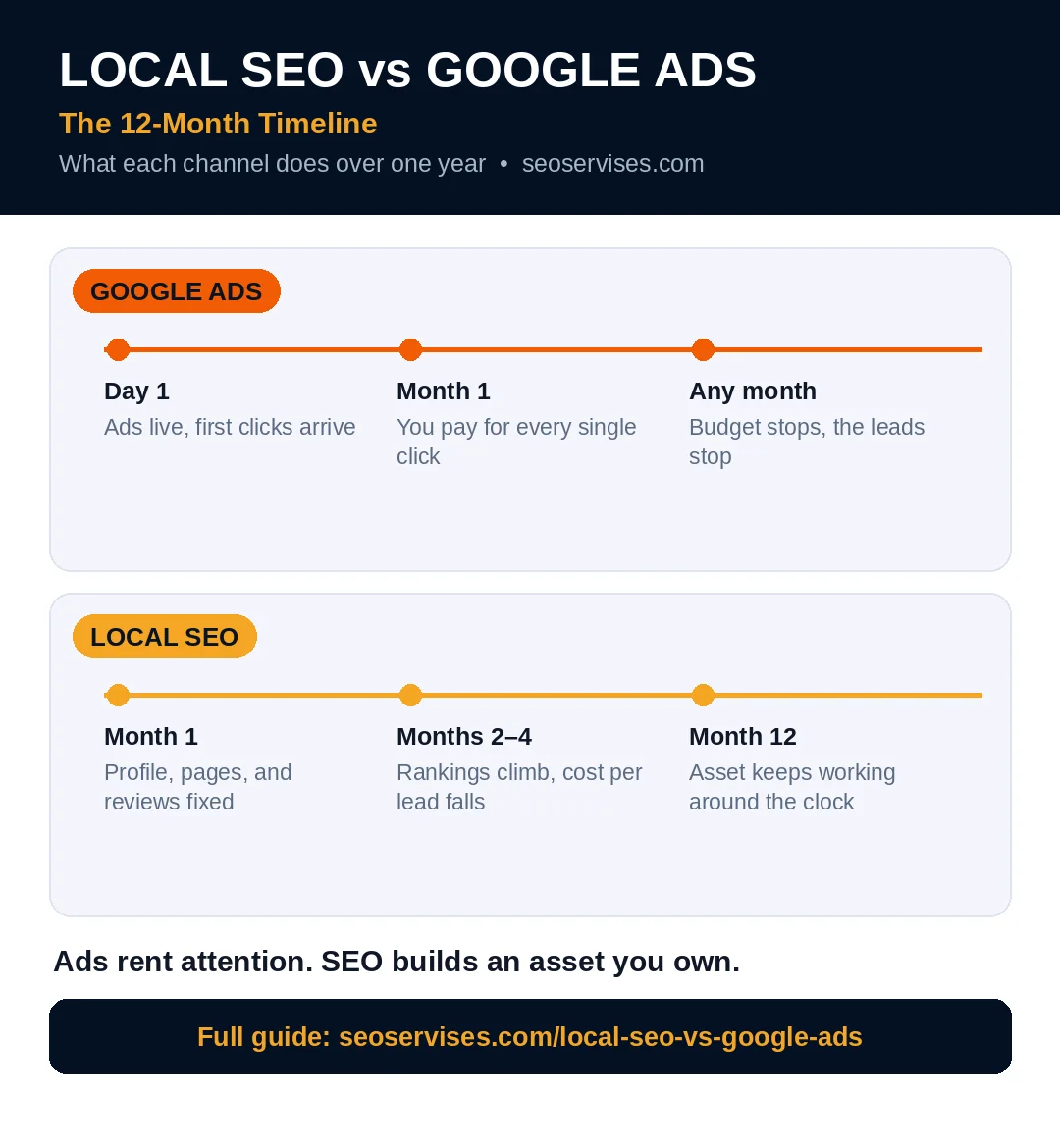
Quick answer: The local seo vs google ads debate has no single winner. Ads deliver leads within days but stop when spending stops. Local SEO takes three to six months but builds lasting value. Most small businesses start with ads and fund SEO in parallel.
What this guide covers:
- How each channel actually works
- A side-by-side cost and speed table
- When ads beat SEO clearly
- When SEO beats ads clearly
- How reviews and trust change the math
- A simple budget split for year one
- How to track real return on spend
How Each Channel Works
Local SEO improves your visibility in unpaid results. Google shows your business in the map pack and organic links. You earn that spot through relevance, reviews, and strong pages.
Google Ads places paid listings above unpaid results. You bid on keywords like plumber near me. You pay each time someone clicks your ad. Visibility starts the same day you launch.
Think of SEO as owning a storefront sign. Think of ads as renting a billboard each month. Both attract buyers walking past your street. Only one stays up when you stop paying.
Google explains the split clearly in its own help docs. Ads never change your organic ranking directly. See the Google Ads help overview for how auctions work.
Is local SEO better than Google Ads?
Neither channel wins for every business or stage. SEO wins on long-term cost per lead. Ads win on speed and precise control. Your timeline and cash flow decide the order. New businesses often need ads first for cash flow. Established businesses often shift budget toward SEO over time.
Table 1: Side-by-Side Comparison
Use this table for a fast first decision. Then read the sections below for nuance.
| Factor | Local SEO | Google Ads |
|---|---|---|
| Speed to first leads | Three to six months | One to seven days |
| Cost model | Monthly work, no per-click fee | Pay per click plus management |
| When you stop paying | Traffic fades slowly | Traffic stops the same day |
| Trust with searchers | High, unpaid result | Lower, marked as an ad |
| Best for | Long-term local growth | Urgent leads and testing |
| Main risk | Slow start, algorithm shifts | Rising click costs, wasted spend |
What Each Channel Really Costs
Ads costs show up in two clear parts. You pay Google for every click. You also pay for campaign setup and management. Click prices vary wildly by trade and city.
A dentist in Chicago pays far more per click. A florist in Ohio pays far less per click. Home services often sit between ten and thirty dollars. Legal and roofing clicks can cost much more.
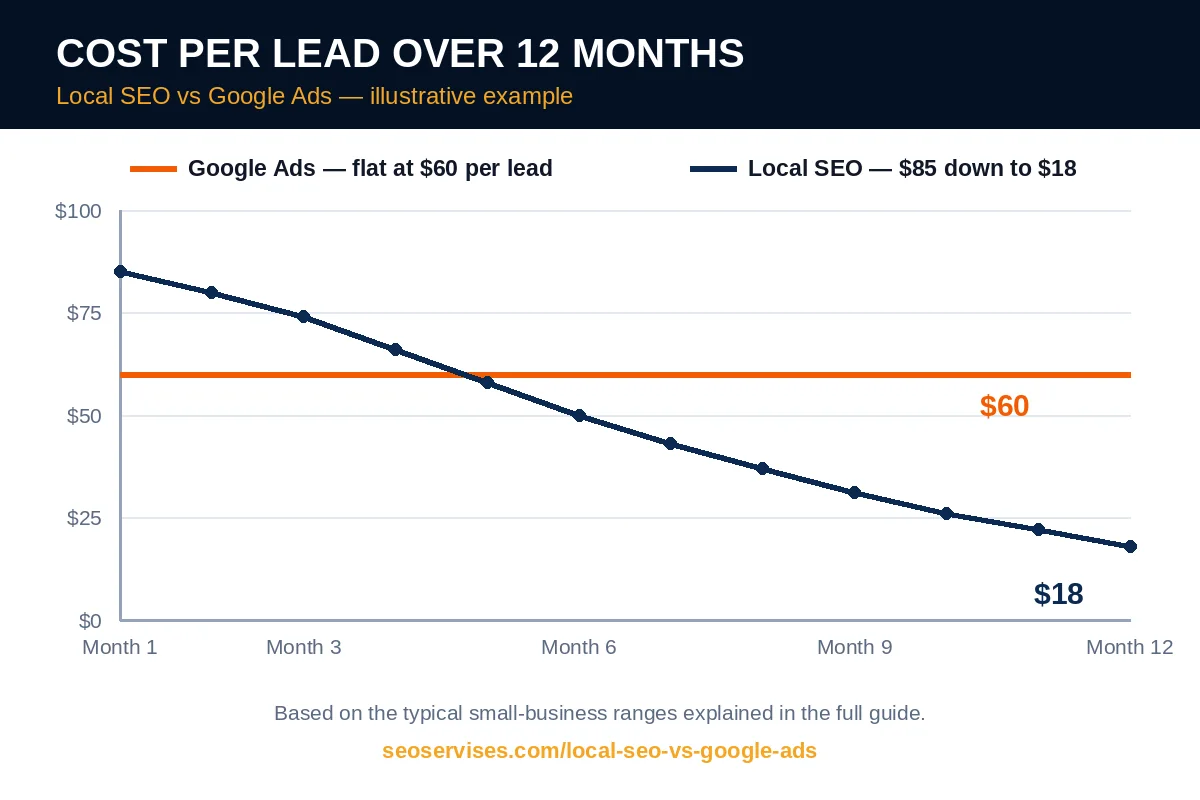
SEO costs show up as steady monthly work. You pay for profile fixes, content, reviews, and links. There is no per-click bill from Google. Your cost per lead usually falls over time.
That falling cost is the core SEO advantage. Month twelve often costs less per lead than month three. Ads rarely show that same downward curve.
How much should a small business spend on Google Ads?
Most small businesses test ads with five hundred to fifteen hundred dollars monthly. That budget buys enough clicks to judge real demand. Spend less and data stays too thin to trust. Track cost per booked job, not just cost per click. Stop any keyword that never produces booked work.
Is local SEO worth it for a small business?
Yes, for any business planning to operate beyond one year. Your Google Business Profile alone can drive free calls. Reviews and map rankings compound month after month. The work also supports every other marketing channel. Owners who skip SEO rent visibility forever instead.
When Google Ads Wins Clearly
Ads win when you need phone calls this week. A new shop has no rankings yet. A slow season leaves crews sitting idle. A new service needs demand testing before investment.
Ads also win for urgent, high-intent searches. Emergency plumbing and locksmith searches convert fast on mobile. Buyers tap the first credible option they see. Waiting months for rankings loses those jobs entirely.
Testing is another clear ads strength. You learn which services buyers actually want. You learn which headlines and offers convert best. That data then guides your SEO content plan.
Use our step-by-step local SEO checklist while ads run. It keeps your long-term build on track daily.
When Local SEO Wins Clearly
SEO wins when buyers research before they call. Dentists, roofers, and clinics all fit this pattern. Buyers read reviews and compare several options first. Organic rankings and reviews shape that shortlist heavily.
SEO also wins in the map pack itself. Ads cannot buy the top map position alone. Your profile, reviews, and citations decide map visibility. For near me searches, the map drives most calls.
Cost control is the third clear SEO win. Once rankings hold, extra clicks cost you nothing extra. A busy month does not raise your Google bill. That predictability helps small teams plan cash flow.
Reviews power both rankings and conversions here. Read our guide on how to get more Google reviews for safe review habits.
Trust, Clicks, and Buyer Behavior
Many searchers skip ads on purpose every day. They scroll straight to the map and organic results. That habit grows stronger for research-heavy purchases. Nobody rushes a ten thousand dollar roof replacement.
Other searchers click ads without noticing the label. Urgent needs push speed over careful comparison. Both behaviors exist on the same results page. Your business likely needs visibility in both zones.
Reviews bridge the trust gap between channels. A strong review profile lifts ad conversion rates too. Buyers check your stars before they call anyone. Weak reviews waste ad spend faster than anything else.
Google states this plainly in its business guidance. Accurate profiles and real reviews build customer trust. Follow the Google Business Profile help pages for official rules.
Do Google Ads help local SEO rankings?
No, ad spend does not improve organic rankings directly. Google keeps paid and organic systems fully separate. Ads still help SEO in indirect ways, though. Click data shows which keywords bring real buyers. Branded searches often rise while campaigns run actively. Use that insight, but expect no ranking shortcut.
A Simple Budget Split for Year One
Start with the channel that matches your cash position. Broke and new means ads first for survival. Stable and patient means SEO first for compounding.
Many owners split the budget in phases instead. Months one to three lean heavily toward ads. Months four to nine move toward an even split. Year two often leans toward SEO by default.
Here is one common pattern for a service business. It assumes a total budget near two thousand dollars monthly. Adjust the numbers to your trade and city.
Table 2: Sample First-Year Budget Split
| Phase | Ads share | SEO share | Main goal |
|---|---|---|---|
| Months 1–3 | 70% | 30% | Fast leads, demand testing |
| Months 4–6 | 50% | 50% | Build profile and rankings |
| Months 7–12 | 30% | 70% | Lower cost per lead |

How to Track Real Return
Track phone calls, not just clicks or impressions. Use call tracking numbers on ads and profiles. Record which jobs came from which channel weekly. Simple spreadsheets beat fancy dashboards nobody checks.
Compare cost per booked job across both channels. Include management fees and your own time costs. Review the numbers every month with fresh eyes. Shift ten percent of budget toward the winner.
Watch branded search volume in Search Console too. Rising brand searches signal growing local awareness overall. That lift often follows months of combined effort.
Also track direction requests on your business profile monthly. Rising direction requests show real local buying intent clearly. Calls, directions, and website taps together tell the full story. One metric alone can mislead your budget calls badly. Review all three beside your ad reports every month. Patterns across channels beat single-channel guesses almost always here.
Can I run local SEO and Google Ads together?
Yes, and most growing businesses should run both together. Ads cover urgent and seasonal demand right away. SEO builds cheaper, steadier demand over time. Shared keyword data makes each channel smarter monthly. Pause ads only after organic leads stay consistent.
Common Mistakes Owners Make
The first mistake is judging SEO after thirty days. Rankings need months of steady work to move. Quitting early wastes the hardest part of the build.
The second mistake is sending ads to weak pages. A slow homepage with no clear phone number burns budget. Fix your landing page before raising any bids.
The third mistake is ignoring the free profile. Your Google Business Profile supports both channels equally. Complete every field, add photos, and reply to reviews.
The fourth mistake is tracking clicks instead of revenue. Vanity metrics hide which channel actually pays rent. Always tie spend back to booked jobs.
A Real Example: A Plumbing Company in Texas
Consider a small plumbing company outside Houston, Texas. The owner had two trucks and one office helper. Calls slowed every winter without fail each year. He had tried flyers and one radio spot before.
In month one, he launched tightly targeted search ads. He limited ads to a fifteen mile service radius. Calls rose within the first week of launch. The cost per booked job stayed high, though.
In parallel, he fixed his Google Business Profile fully. He added real job photos and correct service categories. He asked every happy customer for a review politely. His review count doubled within four months flat.
By month six, map calls matched ad calls weekly. His cost per lead fell across both channels combined. He cut ad spend by forty percent that summer. Organic calls held steady through the next winter.
The lesson is not that one channel won outright. Ads bought time while local assets matured slowly. Reviews and rankings then lowered his total costs. That sequence works for most local service trades.
Seasonal Patterns Change the Answer
Demand for local services rarely stays flat all year. Roofers surge after storms and during spring inspections. Tax preparers peak hard between January and April yearly. Salons spike before holidays and wedding season weekends.
Ads handle spikes with simple budget dials. You raise spend during peak weeks only. You pause or trim during quiet months safely. That flexibility suits seasonal trades very well.
SEO smooths the valleys between those peaks. Rankings keep producing baseline calls during slow weeks. A business with both channels feels fewer empty days. Staff scheduling gets easier with steadier lead flow.
Plan your channel mix around your calendar. Map your three busiest months this year. Fund ads heavily for those exact windows. Keep SEO running steadily behind every season regardless.
Gift-driven and event-driven businesses feel this most sharply. Florists, venues, and caterers all live by dates. Their ads chase moments, while SEO builds reputation yearly. Both roles matter, and neither replaces the other fully.
Questions to Ask Before You Spend
Ask how fast you need new leads flowing. Urgent gaps point straight toward paid campaigns first. Patient timelines favor building organic assets early instead.
Ask what one new customer is worth to you. That number caps your sensible cost per lead. Without it, every budget decision becomes pure guessing.
Ask who will manage the work each week. Ads need bid checks and search term reviews. SEO needs content, review replies, and profile updates. Neglected channels waste money in both cases equally.
Ask how your buyers usually find similar businesses. Referral-heavy trades still benefit from strong search visibility. Search-heavy trades depend on rankings and ads daily. Match your spend to real buyer behavior locally.
Ask what success looks like after twelve months. Write the target as booked jobs per month. Review progress against that number every quarter honestly.
The Verdict for Most Small Businesses
Ads solve today, and SEO solves next year. Framing them as rivals misses the real point. Your buyers move between both zones daily.
Start where your timeline and budget demand first. Then add the second channel as revenue allows. That sequence beats an either-or bet almost always.
Need a clear plan for your trade and city? Contact us for a free channel review today.
Frequently Asked Questions
Which is cheaper in the long run, local SEO or Google Ads?
Local SEO is cheaper over any long horizon. You pay for work once and rankings keep producing calls. Ads charge you for every single click forever. After year one, SEO cost per lead usually drops sharply. Ads costs tend to stay flat or rise yearly.
How long does local SEO take to beat Google Ads?
Most businesses see SEO pass ads on cost within six to twelve months. Map pack gains can arrive sooner with a strong profile. Competitive cities and trades take longer to flip. Reviews and service pages speed the crossover point. Track booked jobs monthly to spot your own crossover.
Should a brand-new business start with SEO or ads?
Start with ads if you need revenue in the first month. Claim and complete your business profile on day one regardless. Begin basic SEO work in the same first month. Rankings take months, so early starts pay off later. Never delay SEO until ads feel comfortable.
Do I need both channels if I rank first already?
You may still want ads for rival brands and new services. Top organic spots do not cover every search layout. Ads also defend your brand name from competitor bidding. Many leaders run small, targeted ads alongside strong rankings. Test pausing ads and watch total leads, not clicks.
What happens to my leads if I stop Google Ads?
Your ad leads stop the same day you pause spending. Calls from maps and organic results continue normally. That cliff is why SEO matters as a safety net. Businesses with strong rankings survive budget pauses far better. Build that cushion before you ever need it.