BLOG • ON-PAGE SEO
What Is Keyword Cannibalization and How Do You Fix It?
Two of your pages can hurt each other. They cover the same topic for the same searcher. Google cannot pick a clear winner between them. So it ranks both lower than either deserves.

This problem has a name: keyword cannibalization. It builds up quietly on busy small sites. One new post each month can create it. The good news is simple: you can fix it.
This guide shows you the full process. You will learn the signs to watch for. You will find real cases in Search Console free. Then you will pick the right fix each time.
Quick answer: This issue starts when two pages target one intent. Find it by checking which URLs share one query. Fix it by merging, splitting, or redirecting pages. Prevent it with a simple keyword map. One page should own each search intent.
The fix process at a glance:
- Spot the warning signs in your data
- Confirm the overlap in Search Console
- Choose merge, split, canonical, or redirect
- Repoint internal links to the winner
- Record the keyword map to prevent repeats
What the Problem Looks Like in Real Life
Picture a dentist in Austin with two pages. One page covers teeth whitening services in detail. A blog post covers whitening costs and options. Both pages aim at the same searcher.
Some weeks the service page ranks at position nine. Other weeks the blog post swaps into that spot. Neither page climbs into the top five. Clicks split between them, and calls stay flat.
Google is not punishing the site here. It is confused about the best answer. Both pages send mixed signals about intent. One strong page would collect all those signals. That page would likely rank higher and convert better.
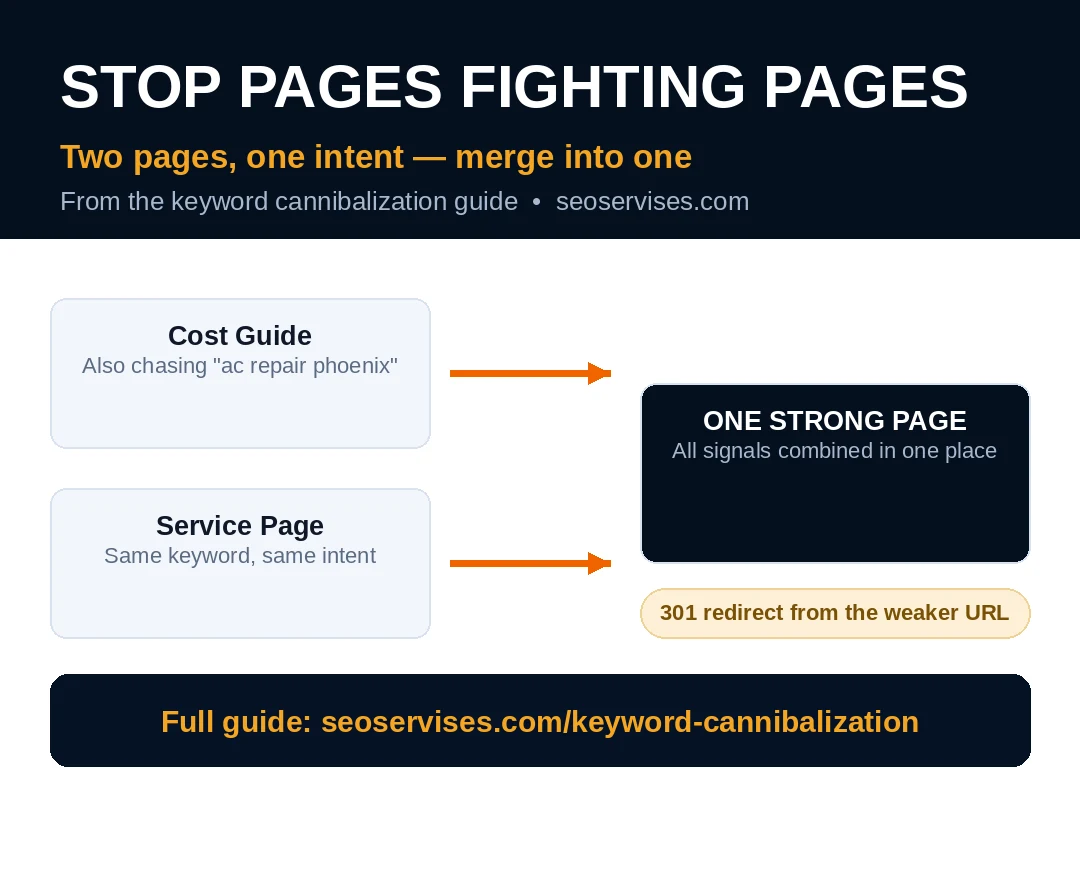
The same pattern hits shops and service firms alike. Category pages fight with buying guides every week. Location pages fight when towns and services overlap. Old posts fight with fresh posts on one topic.
Signs Your Site Has This Problem
Rankings that swap between two URLs are a clue. Check your rank tracker for unstable positions. One URL ranks on Monday, another on Tuesday. That swap pattern points to mixed intent signals.
Traffic drops after a new post are another sign. The new post may steal the old page’s clicks. Total traffic for the topic stays flat or falls. More content produced less result for the business.
Low positions across many similar pages also count. Three pages sit between positions eleven and thirty. None breaks through despite good content and links. Their signals stay split across the group.
Does keyword cannibalization cause a Google penalty?
No, it is not a formal Google penalty. Google does not punish you for overlapping pages. It simply struggles to choose the best one. Rankings fall because signals stay split and weak. The damage is real, but the cause is confusion. Clear signals fix it without any appeal process.
Wrong pages can also rank for key terms. Your blog post may outrank your service page. Readers land on advice when they wanted booking. Visits rise while calls and sales fall. That mismatch costs more than lost rankings alone.
How to Find It in Search Console
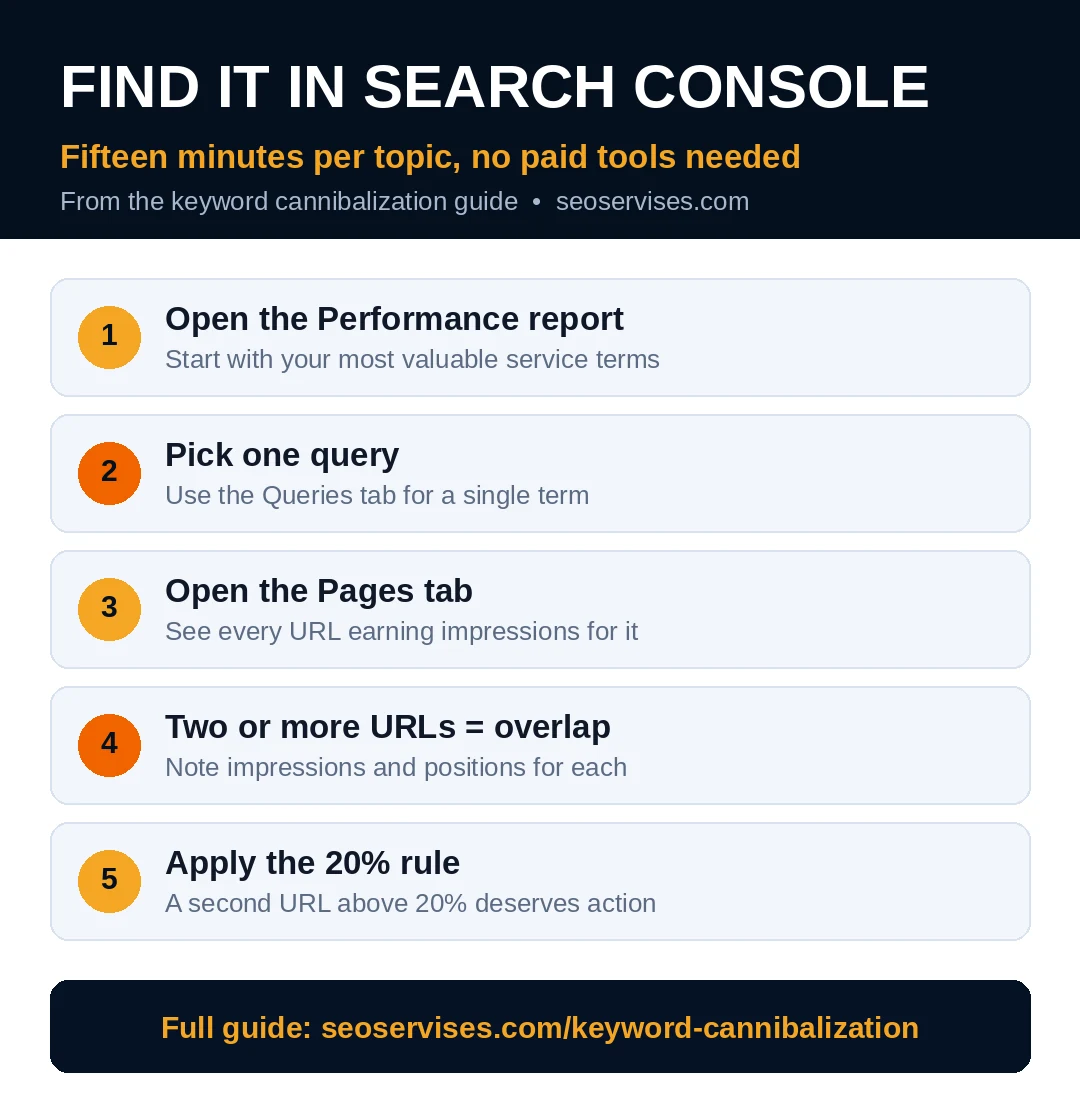
You need no paid tool for this check. Google Search Console holds the data already. The check takes about fifteen minutes per topic. Start with your most valuable service terms first.
Open the Performance report in Search Console. Click the Queries tab and pick one query. Then click the Pages tab below it. Two or more URLs for one query means overlap. Note the impressions each URL earned there.
Can keyword cannibalization happen even if the content is completely different?
Yes, different wording does not prevent the problem. Two pages can use different text and angles. They still compete if they match one search intent. Google judges intent, not word overlap alone. A cost guide and a service page collide often. Check intent before you check the wording.
Repeat the check for your top twenty queries. Record each case in a simple sheet. List the query, both URLs, and their impressions. Add the position each URL holds now. This sheet becomes your fix plan later.
Use one simple rule for priority. Fix cases where the weaker URL earns real impressions. A second URL above twenty percent deserves action. Tiny overlaps with few impressions can wait safely. SmartSites and other audits use a similar threshold.
Run a site search as a second check. Search Google with site:yourdomain.com plus your term. Count how many of your pages appear there. Many results for one term signals weak mapping. Compare that list with your sheet for gaps.
Table 1: Pick the Right Fix
| Situation | Best fix | What to do |
|---|---|---|
| Two pages, same intent, similar depth | Merge and redirect | Combine content, 301 the weaker URL |
| Same term, but two real intents | Split by intent | Rewrite each page for one intent |
| Near duplicates that must stay live | Canonical tag | Point the copy at the main page |
| Thin page with little value | Redirect or noindex | Send value to the stronger page |
| Small overlap, clear winner | Leave it alone | Watch it in your monthly checks |
Fix 1: Merge the Pages and Redirect
Merging is the most common fix. Use it when both pages serve one intent. Pick the URL with more traffic and links. Keep that URL as the surviving page.
Move the best parts of the weaker page across. Keep unique facts, examples, and questions it holds. Cut repeated text instead of stacking it twice. The merged page should read like one guide.
Then set a 301 redirect on the old URL. Point it at the surviving page address. A 301 passes link value to the winner. Google explains redirects in its site move and redirect guide. Update your own links to the new address too.
Fix 2: Split the Pages by Intent
Some page pairs should both stay live. They share a term but serve different needs. A service page sells to buyers ready now. A guide serves readers still doing research. Both intents are real and worth keeping.
Rewrite each page to serve one intent only. Strip buying language from the research guide. Strip long lessons from the service page. Sharpen titles so each states its angle clearly. Google can then match each page correctly.
Is it ever okay to have two pages ranking for the same keyword?
Yes, it can work when intents truly differ. A pricing page and a how-to guide differ clearly. Strong brands sometimes hold two spots for one term. Most small sites gain more from one strong page. Split only when both intents earn real traffic. Otherwise, merge them and focus your effort.
Rename files and headings with care during splits. Put the buying term on the service page. Put the question form on the guide page. Small wording changes send strong intent signals. Check results again after four weeks pass.
Fix 3: Use Canonical Tags and Noindex
Some duplicates must stay live for users. Print pages and filtered shop views work this way. A canonical tag names the main version for Google. It asks Google to credit the main page. The tag is a strong hint, not an order.
Add the tag on the secondary page head. Point it at the full main page URL. Google documents this method in its canonicalization guide. Never point a canonical at a redirected URL. Keep the chain clean and direct.
Use noindex for thin utility pages instead. Tag and category archives often add no value. They can still earn impressions for real terms. A noindex tag removes them from results cleanly. Your SEO plugin can set this in seconds.
How do tags and categories contribute to cannibalization?
Tag pages often repeat your post topics word for word. A tag archive can rank for the same terms. It offers readers a thin list, not real help. Google may show the archive over your post. Noindex tag archives unless they serve readers directly. Categories need the same review on larger sites.
Fix 4: Repoint Your Internal Links
Links inside your site vote for winners. Scattered links keep the confusion alive after fixes. Every fix needs a link cleanup step too.
Link related pages to the surviving page. Use its main term as anchor sometimes. Vary anchors so the pattern stays natural. Remove links that point to redirected URLs directly. Link to the final address in every case.
A clear internal linking strategy prevents most repeat cases. It assigns each topic one clear home page. New posts link up to that home page. They never compete with it for the same term.
Run your pages through a complete on-page checklist review after each fix. Check titles, headings, and anchors still match intent. One missed title can restart the whole problem. The review takes ten minutes per page.
Should I delete one of my competing pages?
Rarely delete a page as your first move. Deleting wastes its links and any traffic it earns. Merge its value into the winner instead. Redirect the old address to the winner after. Delete only pages with no traffic, links, or value. Even then, redirect the address somewhere relevant.
Prevent It With a Keyword Map
Prevention costs less than any repair job. A keyword map is one simple sheet. Each row holds one URL and one primary term. Add the intent in plain words beside it.
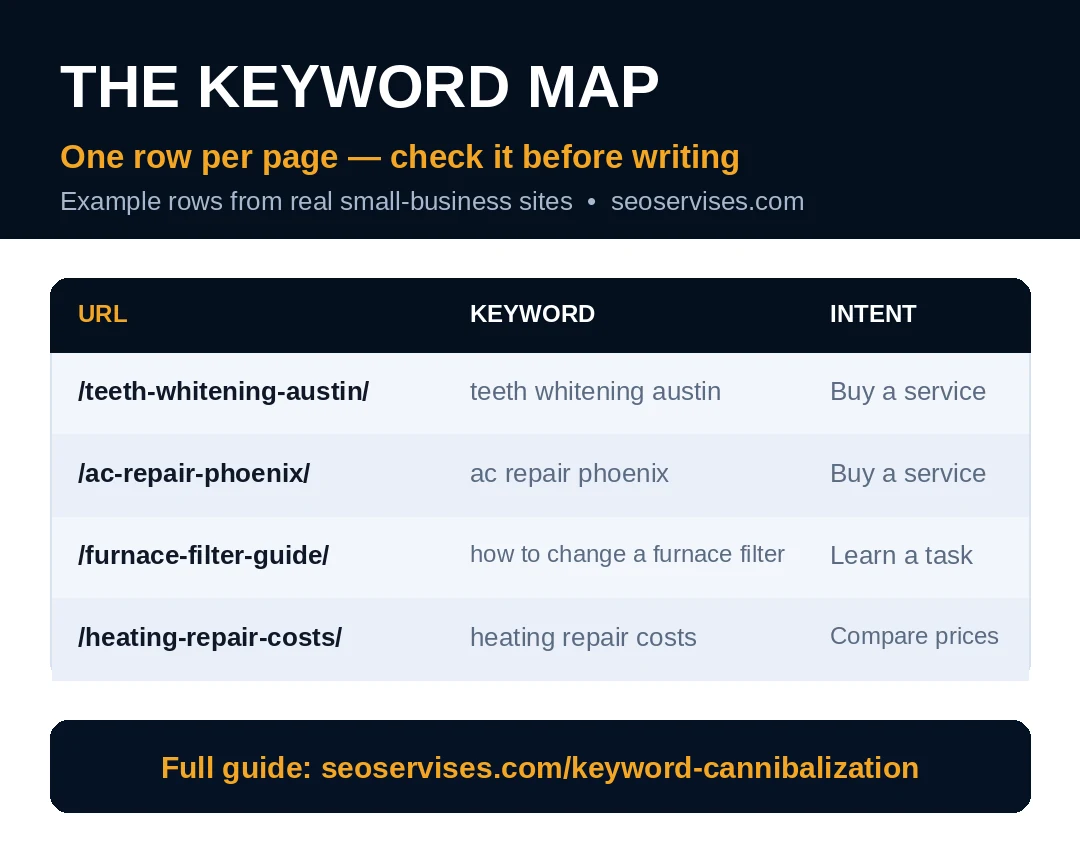
Table 2: Keyword Map Columns That Matter
| Column | What to write | Example |
|---|---|---|
| URL | Full page address | /teeth-whitening-austin/ |
| Primary keyword | One term only | teeth whitening austin |
| Search intent | Buy, learn, or compare | Buy a service |
| Last checked | Date of last review | October 2026 |
Check the map before you plan new content. Search the map for your planned term first. If a row already owns it, change your plan. Write a support post for a related question instead. Your new post then helps the owner page rank.
Review the map once each quarter. Sites drift as services and offers change. Retire rows for pages you removed or merged. Add rows for every page you publish. Ten minutes of upkeep saves hours of repair.
Our on-page SEO team builds this map for every client site. It sits at the center of all content plans. No post gets briefed without a map check first. That one rule stops most overlap at the source.
Ready to Stop Your Pages Fighting Each Other?
One clear page per topic ranks higher. It also converts better than two confused pages. The fix work is plain and fully in your control.
Our team can audit your site for overlap this week. We will map every case and rank fixes by impact. You get a clean plan your team can follow.
Contact us for a free cannibalization check. We will review your top queries in Search Console. You keep the full keyword map either way.
Frequently Asked Questions
How do I check for this problem for free?
Use Google Search Console and run one query check. Open Performance, pick a query, then view Pages. Two URLs with real impressions signal likely overlap. Repeat the check for your top twenty queries. A simple sheet turns findings into a fix list.
How long does it take to recover after a fix?
Most sites see movement within a few weeks. Google must recrawl both pages and the redirects. Busy sites recover faster than quiet sites. Judge results after four to six weeks pass. Keep watching impressions, not daily rank swings.
Does keyword cannibalization always require merging pages?
No, merging is only one of several fixes. Splitting pages by intent works when both earn traffic. Canonical tags suit duplicates that must stay live. Link changes alone fix mild cases sometimes. Match the fix to the cause each time.
Can two pages rank well for one keyword without harm?
Yes, when each page serves a distinct intent clearly. A service page and a pricing guide can coexist. Trouble starts when both chase the same reader need. Then signals split and both pages suffer. Clear intent lines keep pairs safe.
How much keyword overlap is OK?
A little overlap between related pages is normal. Each page still needs one clear primary term. Trouble starts when two pages chase that same term. Watch the weaker page share of impressions closely. Above twenty percent, plan a fix soon.
Does a keyword map prevent cannibalization?
Yes, a map is the best prevention tool available. It assigns one primary term to each page. Writers check it before planning any new content. Overlap gets caught on paper, not in rankings. Update the map every quarter for best results.